
Last updated August 26, 2026
Free on-site gate assessment - hinges, posts, and your LiftMaster or Nice gate operator checked before anything is quoted
The assessment is free and the quote is the invoice.

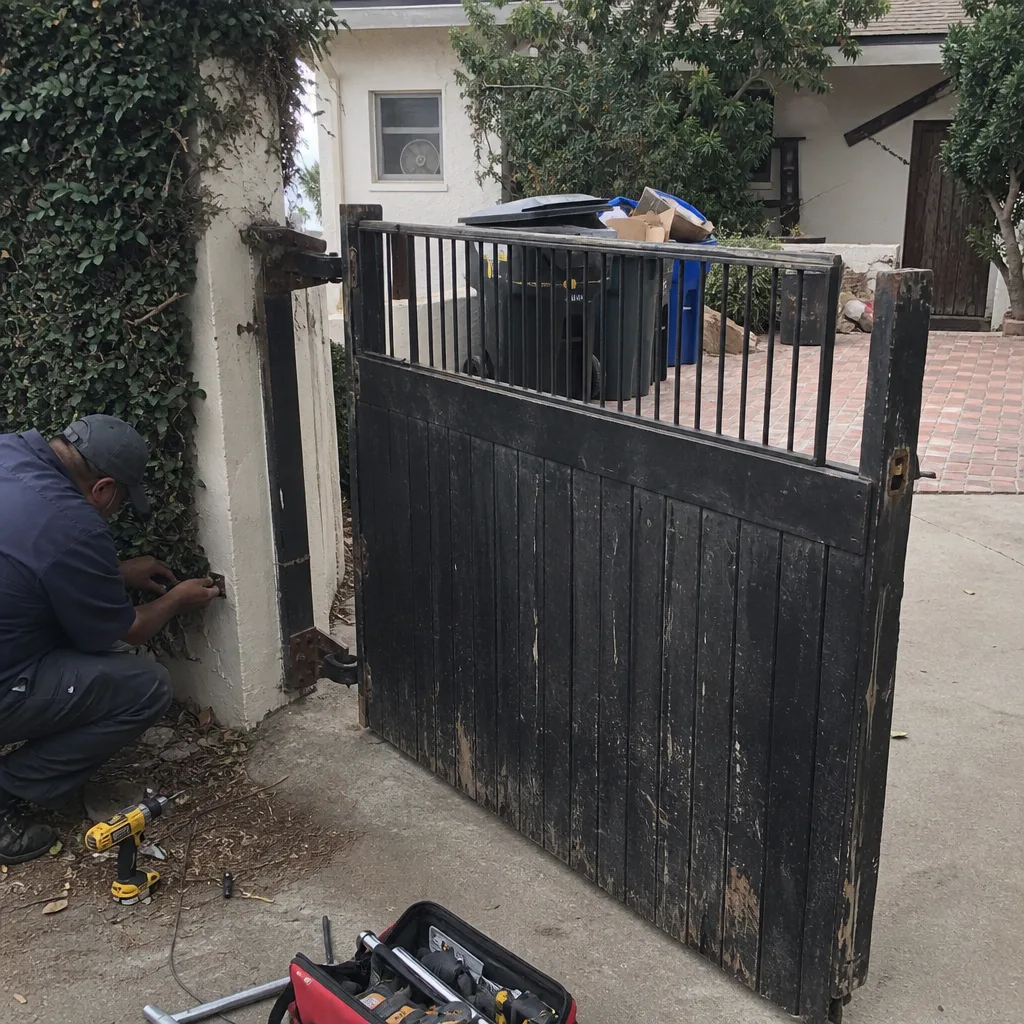 Before
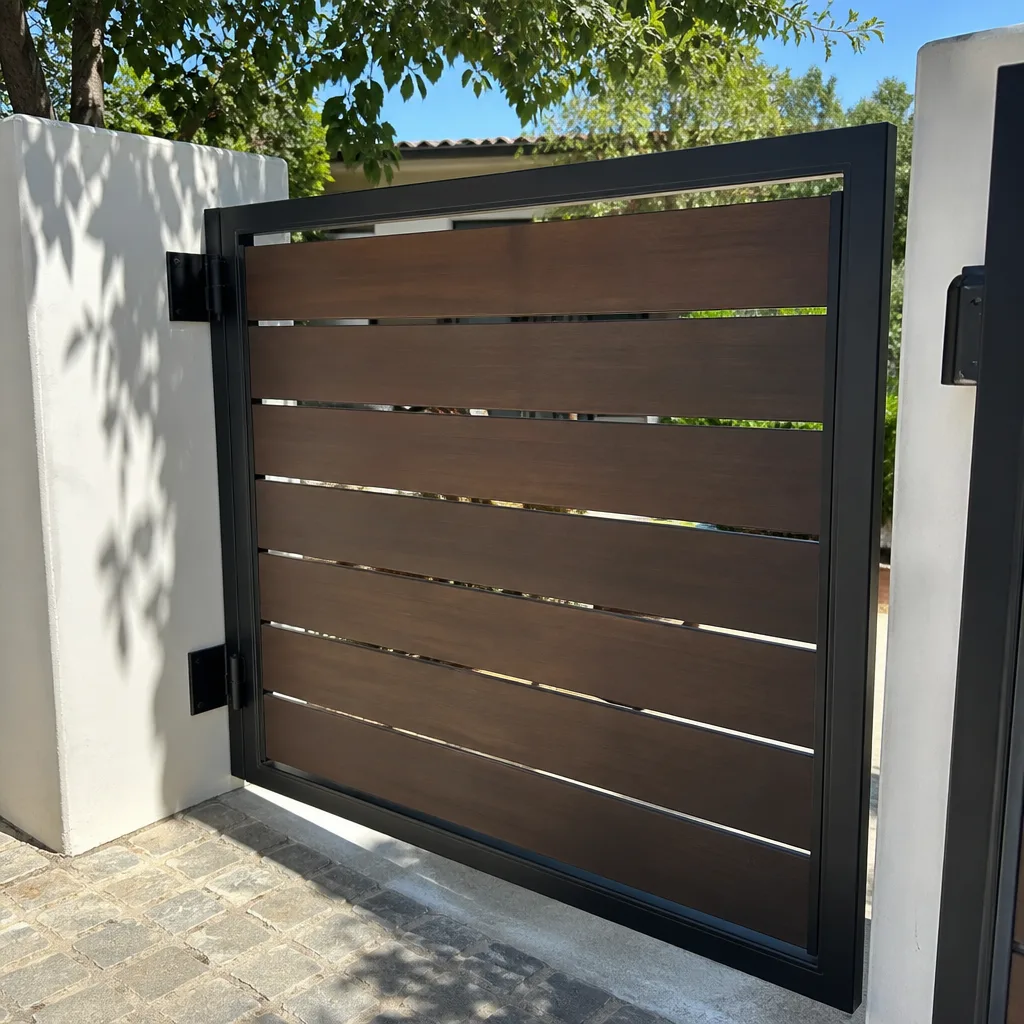 After
After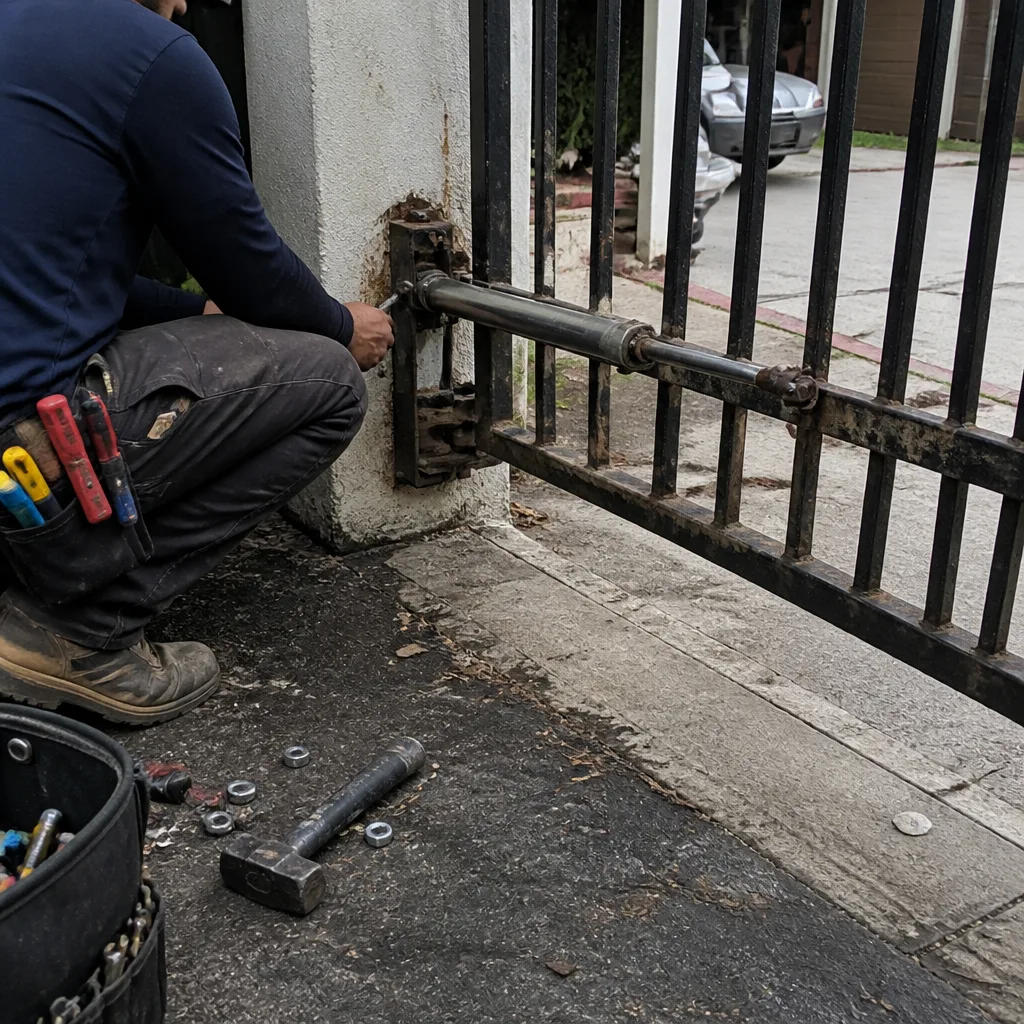 Before
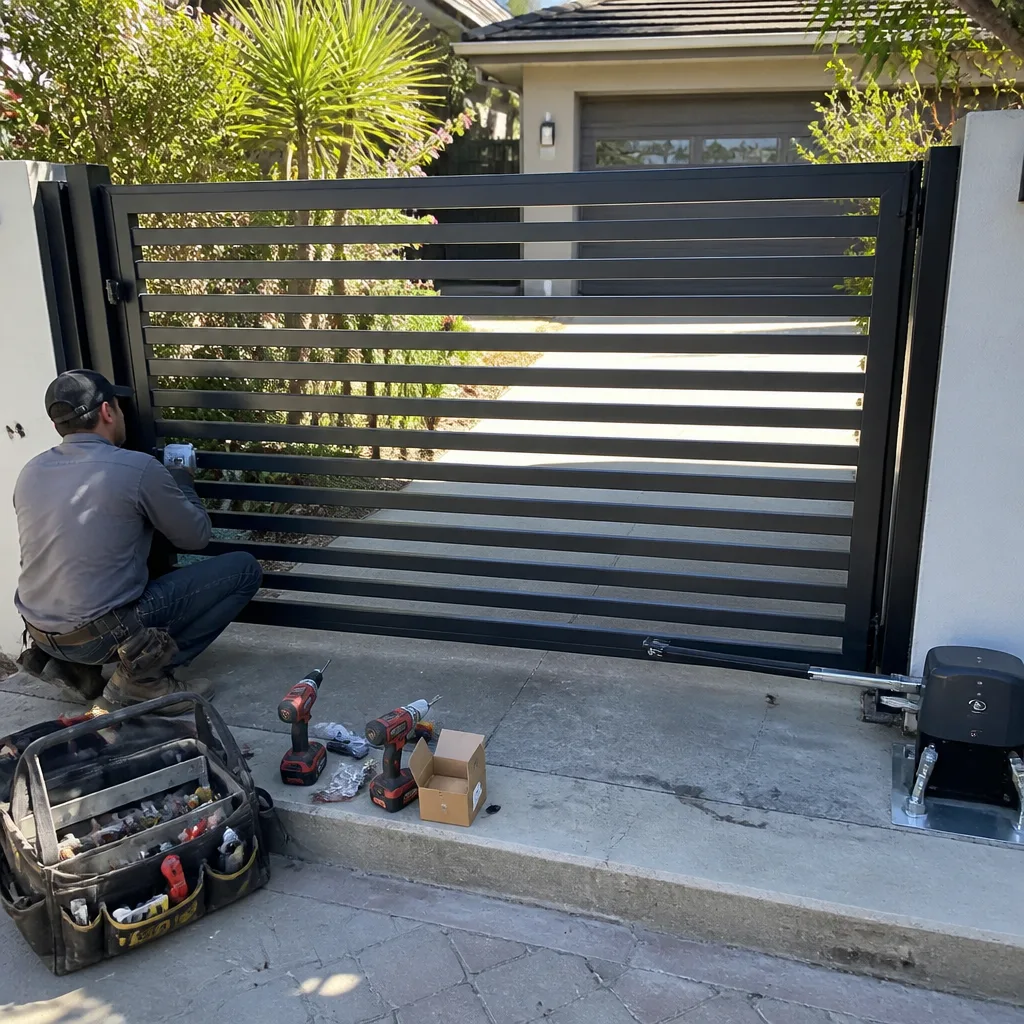 After
After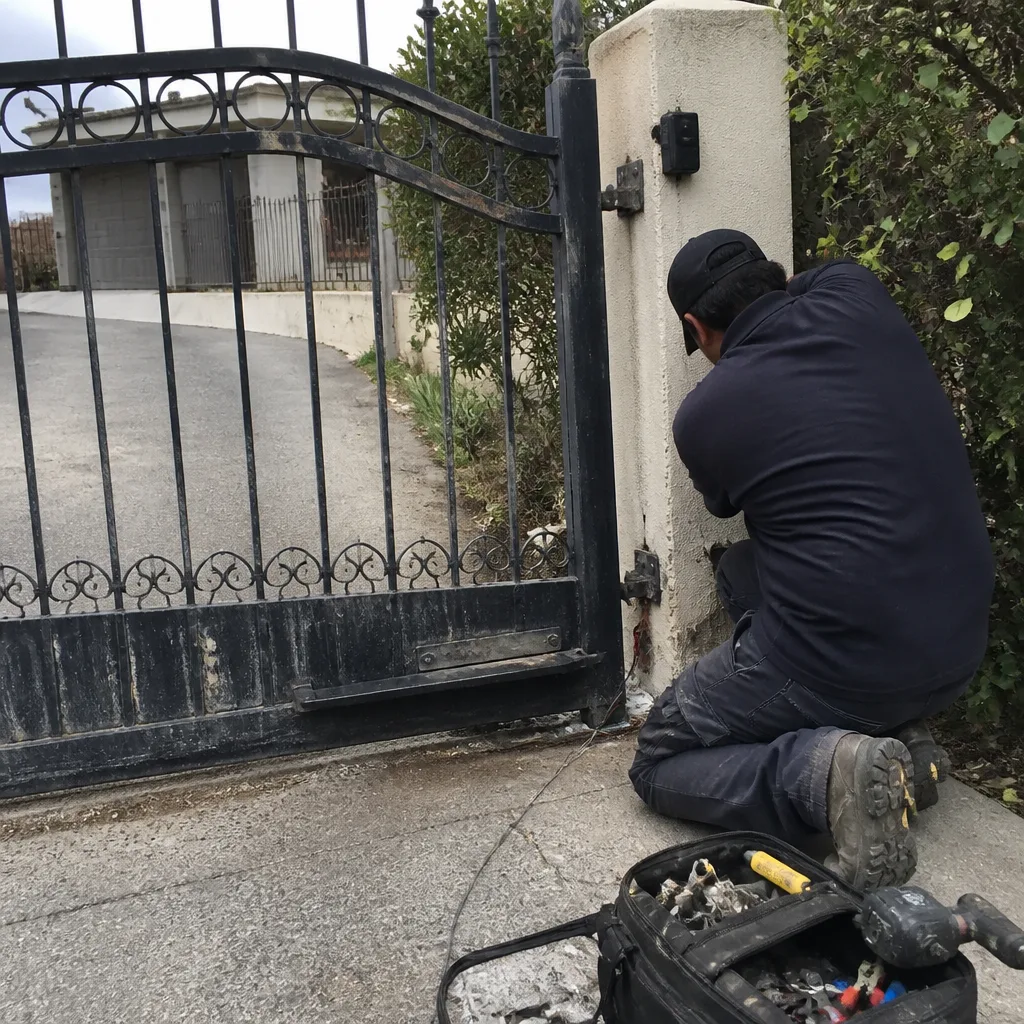 Before
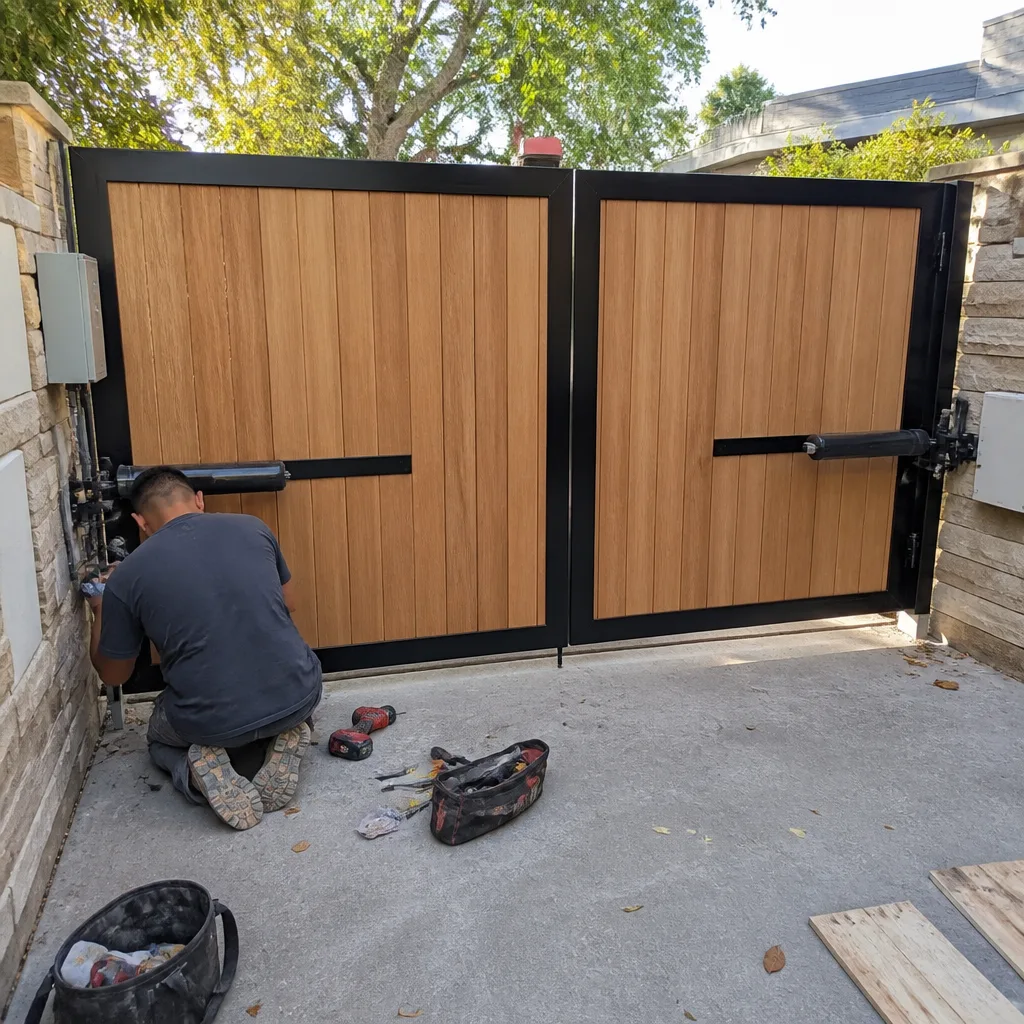 After
AfterSeasonal Gate Repair Care for Malibu: Year-Round Homeowner’s Guide
People ask me what time of year they should service their gate. My answer is always the same: after the rains stop in spring, before fire season in June, and after any major wind event. That’s a different answer than “twice a year,” and it’s a better one. Malibu doesn’t run on a calendar somebody in an office came up with. It runs on rain, salt air, fire risk, and Santa Ana winds. If you live in Malibu, those four things will do more to your gate in a single year than a decade of ordinary use would do to a gate in Bakersfield. This guide walks through the actual seasonal cycles that matter here, what to check in each one, and when to stop checking and start calling our Gate Repair services. By the end, you’ll have a maintenance rhythm that matches the weather outside your window, not a generic checklist from a national website.
Quick Answer
Seasonal gate care in Malibu runs on four cycles, not four quarters: a wet winter that shifts posts and fills motors with moisture, a windy Santa Ana season that stresses hinges and latches, a marine-layer stretch that eats steel and circuit boards, and a hot, dry fire season that gums up operators with dust. Service your gate after the rains stop in spring, again before fire season in June, and immediately after any major wind event. Match the maintenance to those cycles and your gate will outlast the ones maintained on a calendar schedule. For more guides & resources, see our blog.
Table of Contents
- The Wet Season Cycle: Soil, Posts, and Water Intrusion
- Santa Ana Wind Events: The Post-Wind Checklist That Matters
- Marine-Layer Corrosion: The Salt Air Problem Most Guides Miss
- Pre-Fire-Season Operator Cleaning: What to Do Before June
- Late Fall Prep: The One Task That Stops January Water Intrusion Calls
- A Month-by-Month Malibu Gate Maintenance Calendar
- Common Mistakes to Avoid
- When to Call a Professional
- Frequently Asked Questions
- The Bottom Line
The Wet Season Cycle: Soil, Posts, and Water Intrusion
Here’s what most homeowners don’t understand about a gate, and it’s the thing I explain at least twice a week: a gate sags in the hinge post, not in the middle. That’s where we start. In Malibu, the rains from December through March do something specific to the ground. The soil on the hillsides and canyon lots gets heavy with water, expands, then contracts as it dries. A post that sat solid for five years can shift a half inch in one season, and that half inch is all it takes to bend a frame or stress an operator into early failure.
What to check after the rains stop
Walk out to your gate. Look at the gap between the gate leaf and the post on both the latch side and the hinge side. Then look at the ground around the base of each post. Here’s what I look for, in order:
- The gap at the bottom. If the gate sits closer to the ground on one side than it did last summer, the post has moved. Even a quarter inch is worth noting.
- Cracks in the concrete or soil around the post base. Fresh cracks mean the post is working back and forth. That’s not normal settling. That’s the beginning of a problem.
- The operator’s sound. If a gate motor that used to open smoothly now sounds like it’s laboring, it’s not tired. It’s fighting a shifted post or a bent track.
- Hinge wear. Put weight on the gate at the latch end and watch the hinges. Any vertical play means the hinge pin or the hinge mount has worn. A shifted post accelerates the wear.
Fix the panel without the post and you’ll fix it twice. That’s the truth we run into every spring. A homeowner spends money on a new operator because the old one burned out, and six months later the new one burns out too. Nobody looked at the post. In Malibu, where the ground goes through that soak-and-dry cycle every single year, the post is the first thing to check.
If you’re not sure what you’re looking at, call us. We’ve been doing gate repair in Malibu since 2001, and a quick look costs you nothing. We’d rather catch a shifted post in March than replace an operator in June.
Santa Ana Wind Events: The Post-Wind Checklist That Matters
Santa Ana winds hit Malibu hard, usually from October through November but sometimes into December. Gusts of 40 to 60 miles per hour are common in the canyons and on the coastal bluffs. A gate is a big sail. Every gust slams the leaf against the stop, twists the frame, and yanks on the hinges. A gate that survived ten years of ordinary use can be damaged in one afternoon of wind if the hardware was already marginal.
Here’s the checklist I tell homeowners to run the day after a high-wind event, before they resume normal operation:
- Close the gate manually. Don’t use the operator. Put it on manual release and swing the leaf by hand. Feel for resistance, scraping, or a catch in the travel.
- Check the latch alignment. Wind pushes on the gate at the latch side. If the latch no longer lines up with the receiver, the frame has twisted or the hinges have stretched.
- Look at the hinge bolts. High winds can loosen them. A loose hinge bolt under load will oval out the hole over time, and then you’re welding, not tightening.
- Inspect welded joints. Look for fresh cracks in the paint or powder coat, especially where the horizontal rails meet the vertical stiles. A hairline crack in the coating is often the first sign of a cracked weld underneath.
- Check the stop and the post cap. The gate slams against the stop post on every gust. That post takes beating after beating. Look for signs the stop post itself has moved or cracked at the base.
- Test the operator once manually cleared. Let the operator run a full open-close cycle and listen. A grinding sound after a wind event often means debris got driven into the track or the chain.
We’ve seen gates in Malibu where the wind bent the leaf enough that the operator strained to open it for three days before the motor gave out. The homeowner thought the motor failed on its own. It didn’t. The wind had bent the gate and the motor died trying to open a gate that didn’t want to move. Run the checklist after every major wind event. It takes ten minutes and it’s free.
Marine-Layer Corrosion: The Salt Air Problem Most Guides Miss
Here’s something most generic gate care guides don’t mention at all: the marine layer. In Malibu, especially along the coastal flats from Point Dume down to the city limits, May and June bring gray mornings and a damp, salty mist that clings to everything. That mist settles on your gate and it doesn’t dry fast. Steel rusts in that environment. Circuit boards corrode. Connectors that were fine all winter start showing green fuzz by July.
The salt exposure is worst during what locals call “June Gloom,” but honestly it runs from late April through early July along the coast. During that stretch, bare steel exposed to the morning marine layer can begin showing surface rust within a week or two. A gate that’s been painted or powder coated is protected, but only as long as the coating is intact.
What to coat and when
- Weld points and bare metal. Any chip, scratch, or rub point on your gate is an entry point for salt moisture. Touch up bare steel with a rust-inhibiting primer and paint before the June Gloom sets in.
- Hinge pins and latch hardware. A little lithium grease on the hinge pins and a light oil on the latch mechanism goes a long way. Do this in late April.
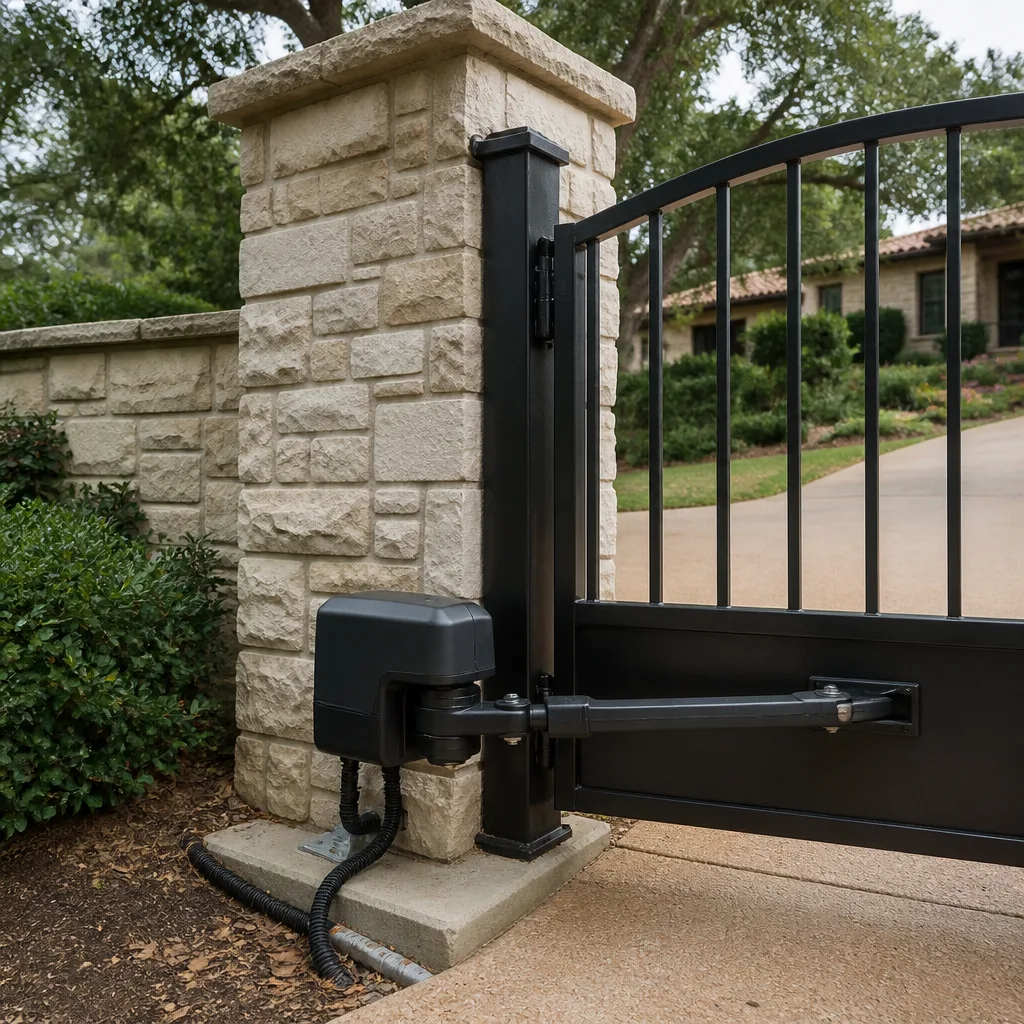
- Operator housing and connections. If your operator sits outdoors, check the cover seals and cable glands. Moisture gets in through worn gaskets. On outdoor circuit boards we see more failures in July and August than any other time of year.
- Travertine or decorative post caps. If you have natural stone caps on your posts, check that the adhesive bed is still intact. Moisture trapped under a loose cap against steel will rust it out.
If you live west of Kanan Dume Road, your salt exposure is higher than someone in the hills or east of town. That doesn’t mean inland gates don’t rust, but the coastal marine layer is relentless. A gate that gets touched up every spring lasts fifteen years. A gate ignored for three marine-layer seasons might need a new leaf at year eight. The difference is a can of spray paint and twenty minutes with a grease gun.
Pre-Fire-Season Operator Cleaning: What to Do Before June
June through October in Malibu is fire season. Dry air, high heat, and months of accumulated dust from the hills and canyon roads. That dust doesn’t just blow around. It settles on and into everything, including your gate operator. The motor housing on a typical slide gate operator has vent openings for cooling. Those vents pull in dust. The drive gears, chain, and limit switches all sit in the same air path. By September, a gate operator that hasn’t been cleaned can be running with a quarter-inch of packed dust on the gears.
Before June, take an hour and do this:
- Blow out the motor housing. Use compressed air or a leaf blower on low. Get the dust out of the cooling fins and off the top of the control board.
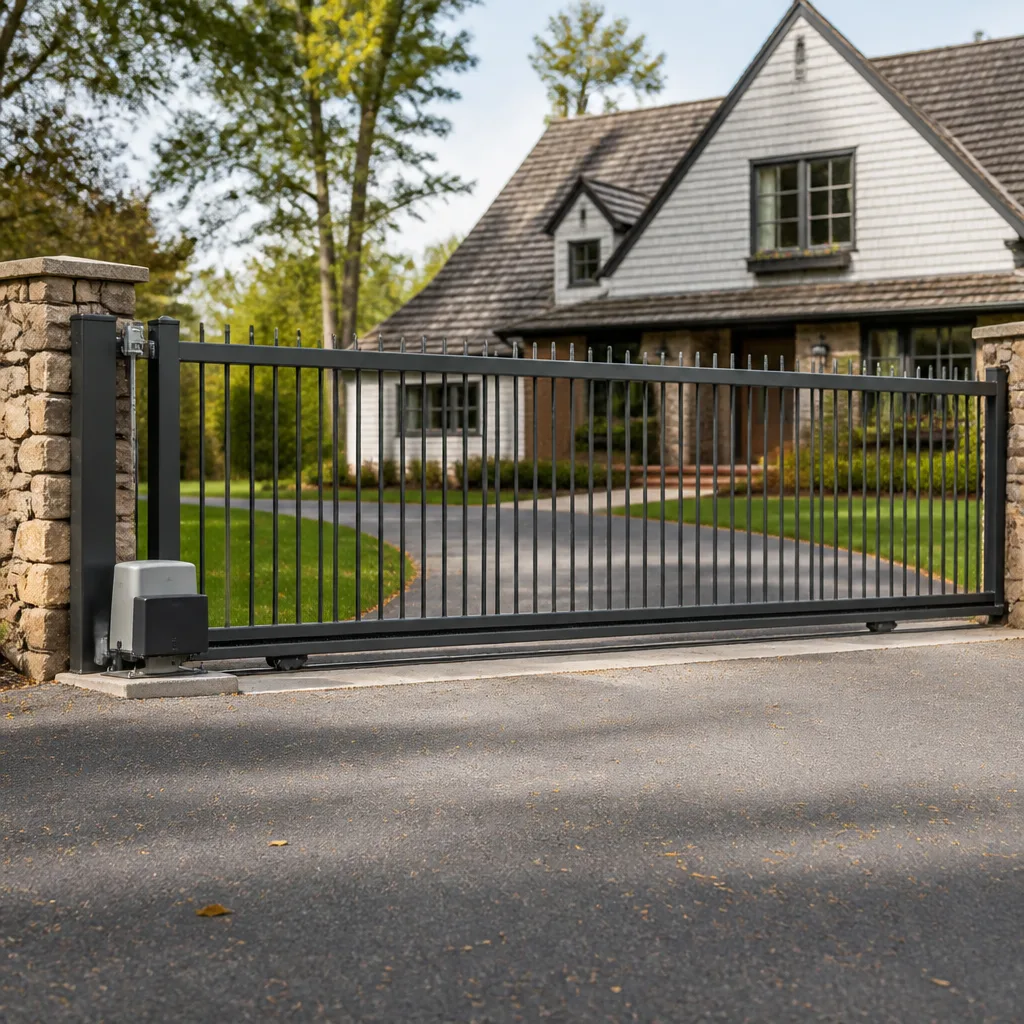
- Clean the drive rails and gear rack. On a slide gate, the rack that the gear drives along gets packed with dust and old grease. A stiff brush and a rag is all it takes. When the rack is fouled, the operator works harder and the gear wears faster.
- Check the limit switches. Dust builds up on the actuating levers. A limit switch that doesn’t trip right is how a gate opens too far or doesn’t close fully. A brush with a dry cloth fixes most of it.
- Inspect the wire connections. Heat and dust together cause resistance and heat-related failures. Look for discolored insulation or loose screw terminals. If you see melted or darkened wire insulation, stop and call us. That’s an electrical issue, not a cleaning issue.
- Run a full test cycle. Open and close the gate five times while you watch and listen. If it hesitates, grinds, or reverses on its own, something’s wrong.
We work on operators from Viking, Ghost Controls, DoorKing, and Elite regularly, and the failure mode we see in fire season is almost always the same: dust-packed internals leading to heat buildup leading to a burnt control board or a stripped drive gear. A clean operator runs cooler and lasts years longer. If you’d rather not open the housing yourself, our gate motor and opener service in Malibu handles it. It’s a quick visit and it’s cheaper than replacing a board.
Late Fall Prep: The One Task That Stops January Water Intrusion Calls
Every January, my phone rings with the same call. The rains have come, and somebody’s gate operator is dead or shorting out. They want to know if it’s covered by warranty, if it’s fixable, if they need a new one. And in a lot of cases, the problem started back in November, before the first real rain. Here’s the one thing to do before the wet season starts: reseal and weatherproof every penetration on the operator and the control wiring.
That sounds small. It’s not. The majority of water-intrusion calls I get in January and February come from operators that were sealed fine when they were installed, but seals age. Rubber gaskets crack. Conduit fittings loosen. Cable glands get brittle in the sun. One small gap at a cable entry point is all it takes for a month of rain to wick moisture into a control board or a capacitor housing.
The late-fall checklist
- Check every gasket and seal on the operator housing. If the rubber is cracked or compressed flat, replace it. A gasket is a $5 part. A control board is a $200 part.
- Inspect conduit and cable entry points. Look for gaps where the cable enters the housing. A dab of silicone sealant closes it. Make sure the conduit is tight and the fittings haven’t backed off.
- Verify the drain holes are clear. Most outdoor operator housings have weep holes at the bottom. If they’re clogged with dust or bug nests, water has nowhere to go and it pools inside. Clear them.
- Check the battery backup, if you have one. Batteries degrade faster in heat, and a battery that’s been cooked all summer might not hold a charge when the power blinks during a rainstorm. Test it in November.
- Run the gate through a full cycle in the rain if you can. The first light rain of the season is a good time to watch. If the operator trips a GFCI or the gate misbehaves when it’s wet, that’s the early warning of a bigger problem.
Do this in November, before the first storm. In Malibu, the storm system that hits in early December often catches people off guard. An operator that makes it through the first rain with a dry control board will usually make it through the whole season. The one that doesn’t is the one that fails in January.
A Month-by-Month Malibu Gate Maintenance Calendar
If you like a schedule, here’s the whole year on one page. This is what we’d tell a neighbor in Malibu to do, month by month. It doesn’t require spending a weekend on any of it. Most months it’s five or ten minutes with a cup of coffee in your hand.
January and February: Watch and Listen
- After each rainstorm, run the gate through a full cycle and listen for changes.
- Check for puddling at the base of posts. Standing water against steel post bases is slow, quiet damage.
- If the gate hesitates or the operator sounds labored, note it. Don’t ignore it for two months.
March and April: Post-Rain Assessment
- Check post alignment and gate gaps as described in the wet season section above.
- Inspect hinges and latch for play. Grease hinge pins with lithium grease.
- Touch up any bare steel or scratches with rust-inhibiting primer and paint before the marine layer thickens.
May and June: Pre-Fire-Season Cleaning
- Blow out the operator housing and clean the drive rack and rails.
- Check limit switches and wire connections inside the operator.
- Replace worn gaskets before the salt air and dust season peaks.
July and August: Heat Watch
- Run the gate in the heat of the day once. Listen for a strained motor or thermal shutdown.
- Keep the track and roller area clear of debris. Dry brush blows into tracks in summer.
- If the operator cycles on and off more than usual, have it looked at. A motor that’s overheating is a motor that’s failing.
September and October: Santa Ana Readiness
- Check all hinge bolts and latch hardware for tightness before wind season hits.
- Run the post-wind checklist after the first Santa Ana event, even if it’s a light one.
- Clear any overhanging branches that could fall on the gate or the operator during a windstorm.
November and December: Wet Season Prep
- Reseal cable entry points and replace worn gaskets on the operator.
- Clear weep holes in the housing.
- Test the battery backup and run the gate through a full cycle in the first rain.
That’s the whole year. Most of it takes less time than reading this guide. The point is consistency built around what’s actually happening outside, not a generic reminder on a calendar app.
Common Mistakes to Avoid
- Lubricating the drive rack or chain with WD-40. WD-40 is a water dispersant, not a lubricant. It strips away what little grease is left and leaves the metal dry. Use a proper chain or gear lubricant designed for gate operators.
- Ignoring a post that’s shifted half an inch. Half an inch at the gate leaf becomes a bent frame and a burned-out operator within a season or two. The post is the foundation. Fix the post first.
- Replacing the operator without checking the gate itself. Show me the gate closing on its own and I’ll show you where it’s failing. A new operator on a binding gate is money spent twice.
- Waiting until the gate stops working to call. By the time a gate refuses to open, something has been wearing or failing for weeks or months. The noises and the hesitations were the warnings.
- Pressure washing the gate and operator. High-pressure water drives moisture into the operator housing, into the control board, and into bearing seals. It causes exactly the damage you’re trying to prevent.
- Letting landscape irrigation hit the gate or operator. Sprinkler water is the slowest, most reliable gate killer in Malibu. It runs every morning, hits the same spot, and never stops. Redirect sprinklers away from the gate, the posts, and the operator.
- Assuming a warranty covers water or dust damage. Most operator warranties cover manufacturing defects, not environmental damage. Cleaning and sealing are on you, and they’re cheaper than a warranty denial.
When to Call a Professional
There’s a line between maintenance and repair, and the line is usually obvious once you’re standing at it. If a post has shifted enough that the gate no longer closes square, don’t try to pull it back with a come-along. A shifted post in Malibu soil needs to be re-set properly, or it will shift again. If you see cracked welds, don’t run more beads over cracked paint. The metal underneath needs to be cleaned and welded correctly, and that means someone with a welder and the knowledge to use it. Electrical issues are the same. If you open the operator and find burnt wiring or a melted control board, close the cover and call us. On-site welding and operator diagnostics are exactly what we do. We don’t haul your gate away, and we don’t replace parts that don’t need replacing. Hal Gatewood has been at this since 2001, and the name is on the shop. Gatewood Fence & Gate offers free estimates in Malibu - call (559) 314-7708 and a real person answers.
Frequently Asked Questions
Service it on the Malibu cycle: after the rains stop in spring, before fire season in June, and after any major Santa Ana wind event. That works out to roughly two or three times a year, but the timing matters more than the count.
A basic seasonal maintenance visit typically runs $150 to $300, depending on the operator type and condition. More involved work like post re-setting or welding is quoted separately after we see the gate. Call (559) 314-7708 for an exact number on your gate - estimates are free and there’s no trip charge inside the county.
If the gate is stuck closed or stuck open, yes. We answer the phone 24 hours a day with a live person, not a voicemail. If you’re in Malibu and the gate won’t move, call us and we’ll get someone there.
Use lithium grease on hinge pins and a proper gear or chain lubricant on the drive rack and chain. Don’t use WD-40 on the drive system. It’s not a lubricant, and it’ll strip the grease you already have.
Yes, and it’s worse on the coastal side of Malibu than in the canyons. Bare steel starts showing surface rust within a couple of weeks of regular marine-layer exposure. The fix is simple: keep bare steel touched up and hinges greased before the June Gloom season.
Reseal every penetration on the operator and check the gaskets and weep holes. The majority of January water-intrusion calls start with a failed seal from the previous summer. Spend five minutes on the seals in November and you’ll likely skip the repair call in January. For help with the whole pre-rain checklist, our crew does gate care and maintenance for Malibu homeowners all fall.
The Bottom Line
Your gate lives in Malibu. That means it deals with rain that moves soil, wind that slams the leaf like a sail, salt air that eats bare steel, and heat that cooks an operator’s internals. The maintenance schedule that works is built around those cycles, not around the seasons somebody printed in a manual. Check your posts after the rains, clean the operator before June, coat and grease before the marine layer peaks, run the checklist after every big wind, and seal everything in November. Ten minutes a month is all it takes. And when you find something you don’t like, call someone you can look in the eye. We’ve been fixing gates in Malibu since 2001, we weld on site, and we stand behind every job with the 90-Day Done Right Promise in writing. The name is on the shop, and the shop is down the road - that is the oldest accountability there is. Call (559) 314-7708 for a free estimate, whether it’s a broken gate, a tired operator, or a full gate installation in Malibu.
Written by Hal Gatewood, Owner at Gatewood Fence & Gate, serving Malibu since 2001.