
Last updated August 26, 2026
Free on-site gate assessment - hinges, posts, and your LiftMaster or Nice gate operator checked before anything is quoted
The assessment is free and the quote is the invoice.

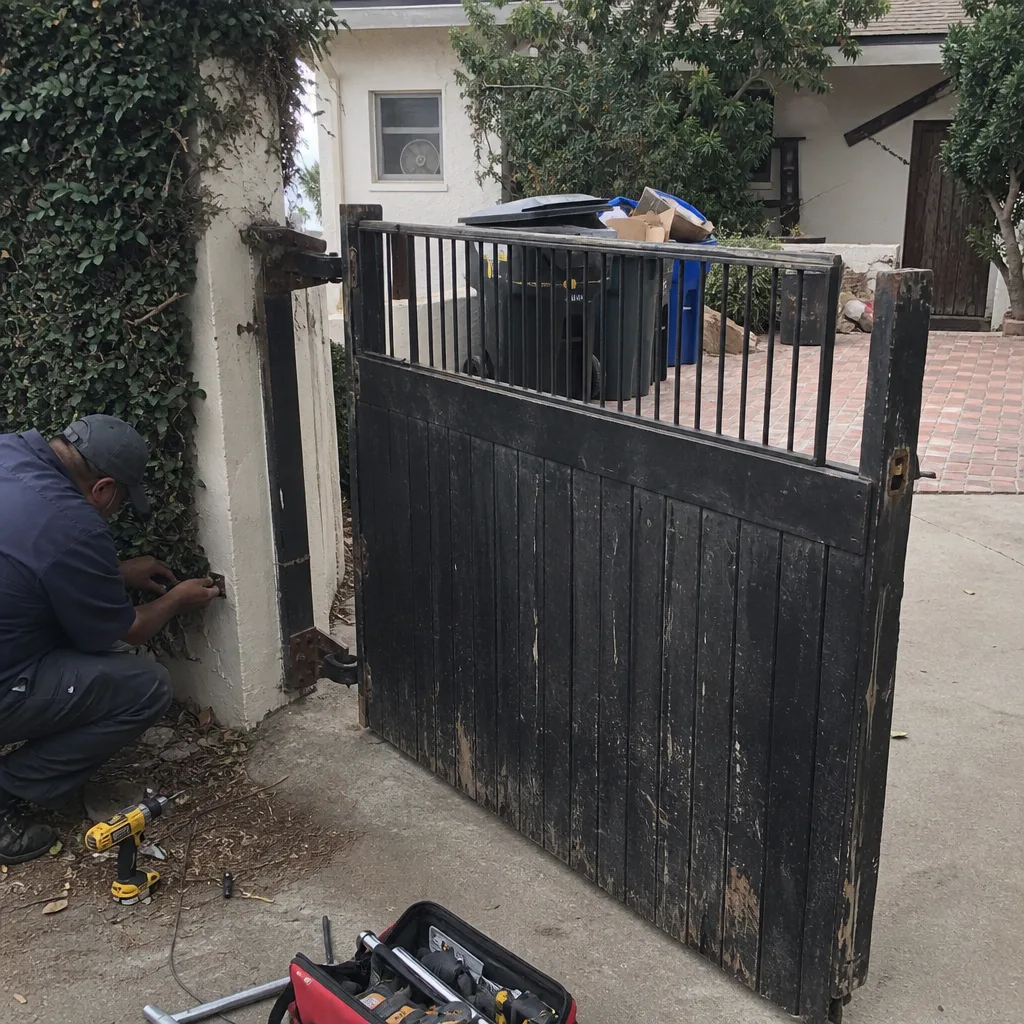 Before
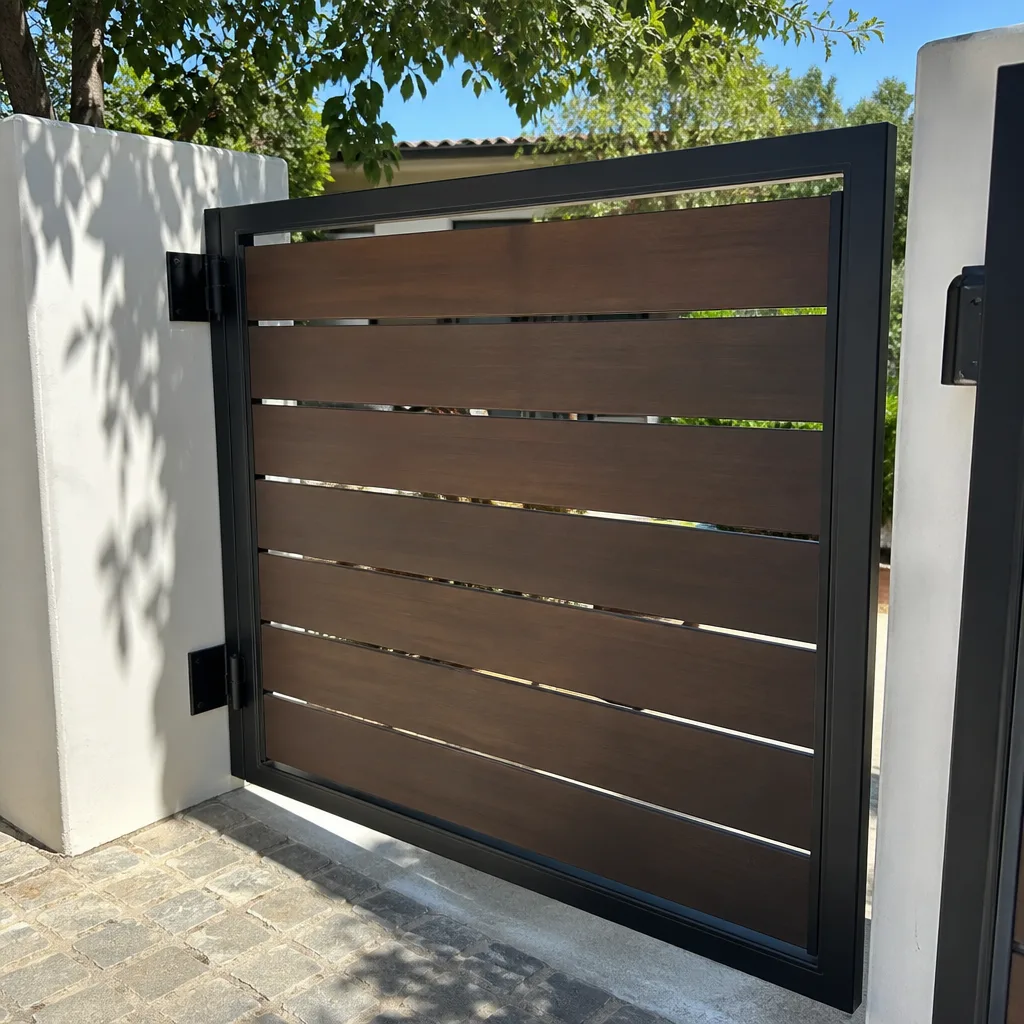 After
After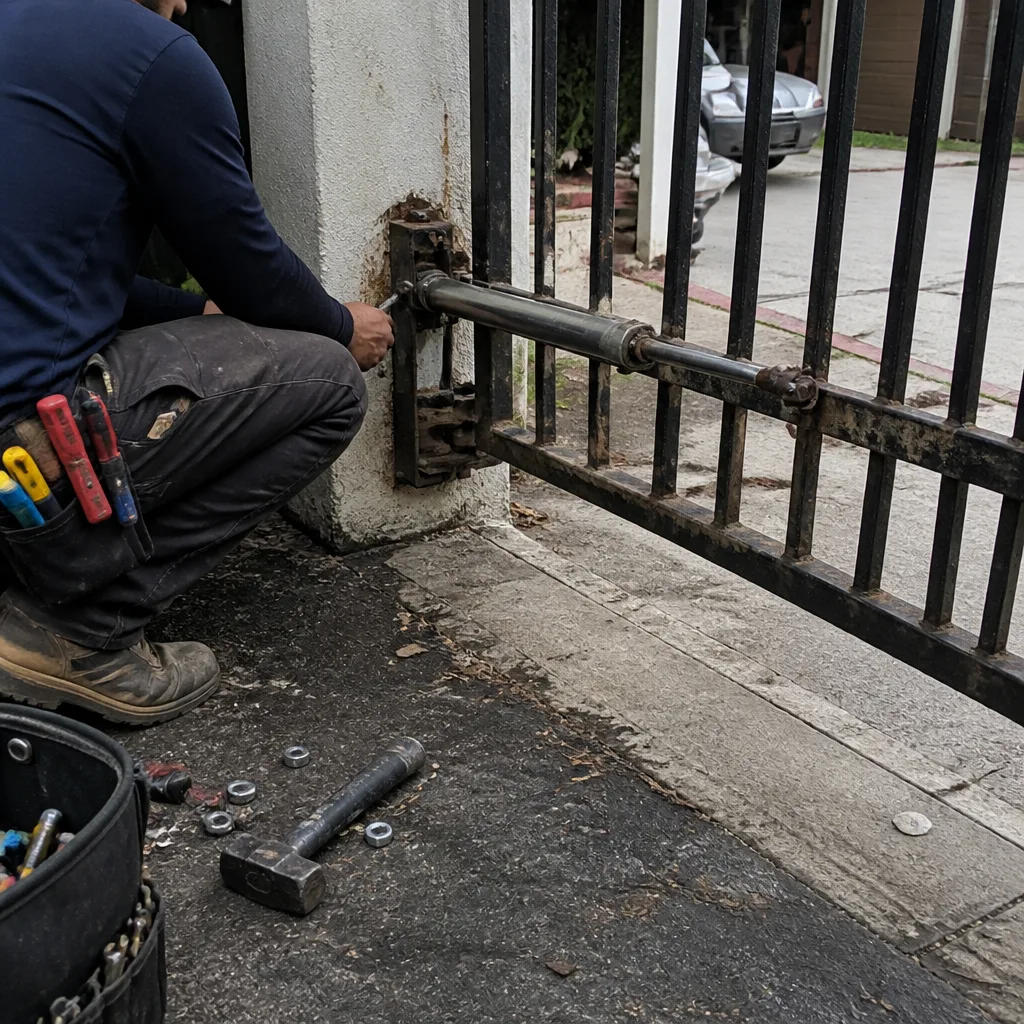 Before
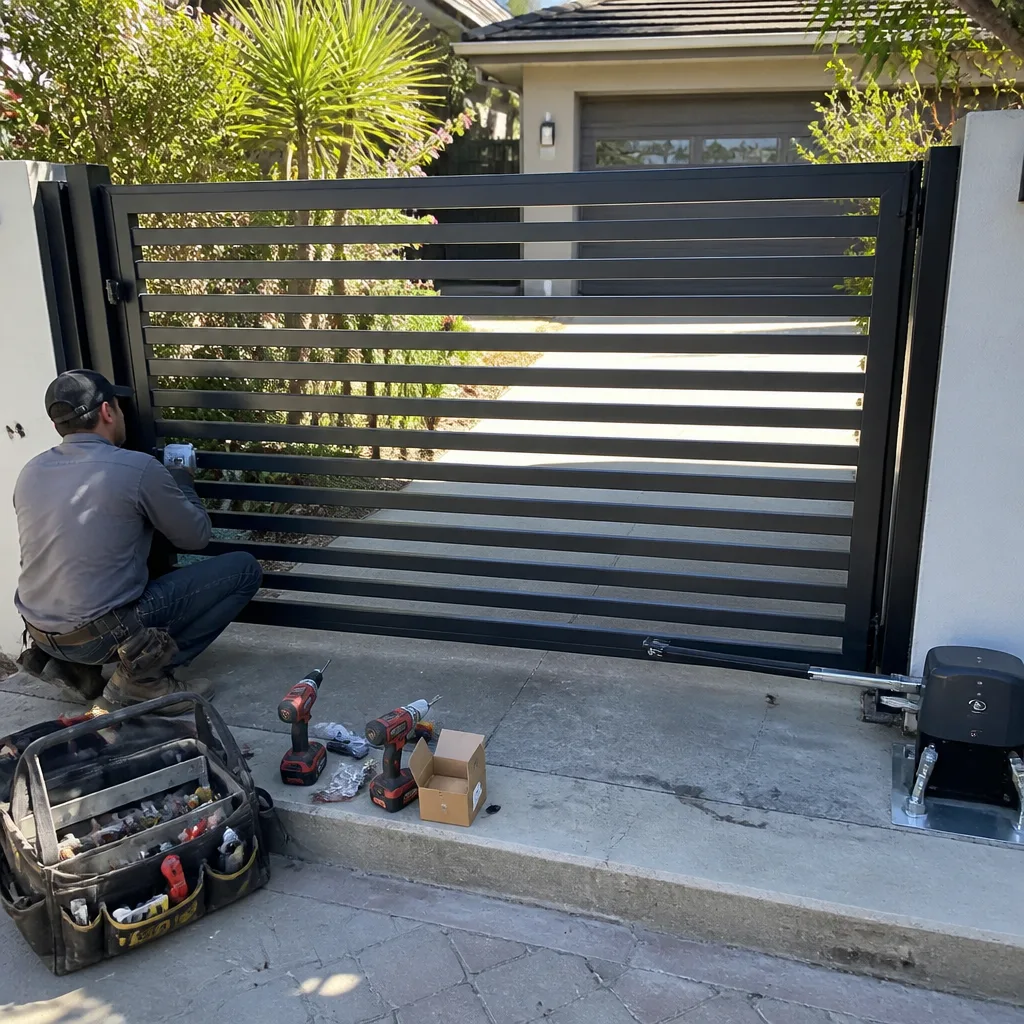 After
After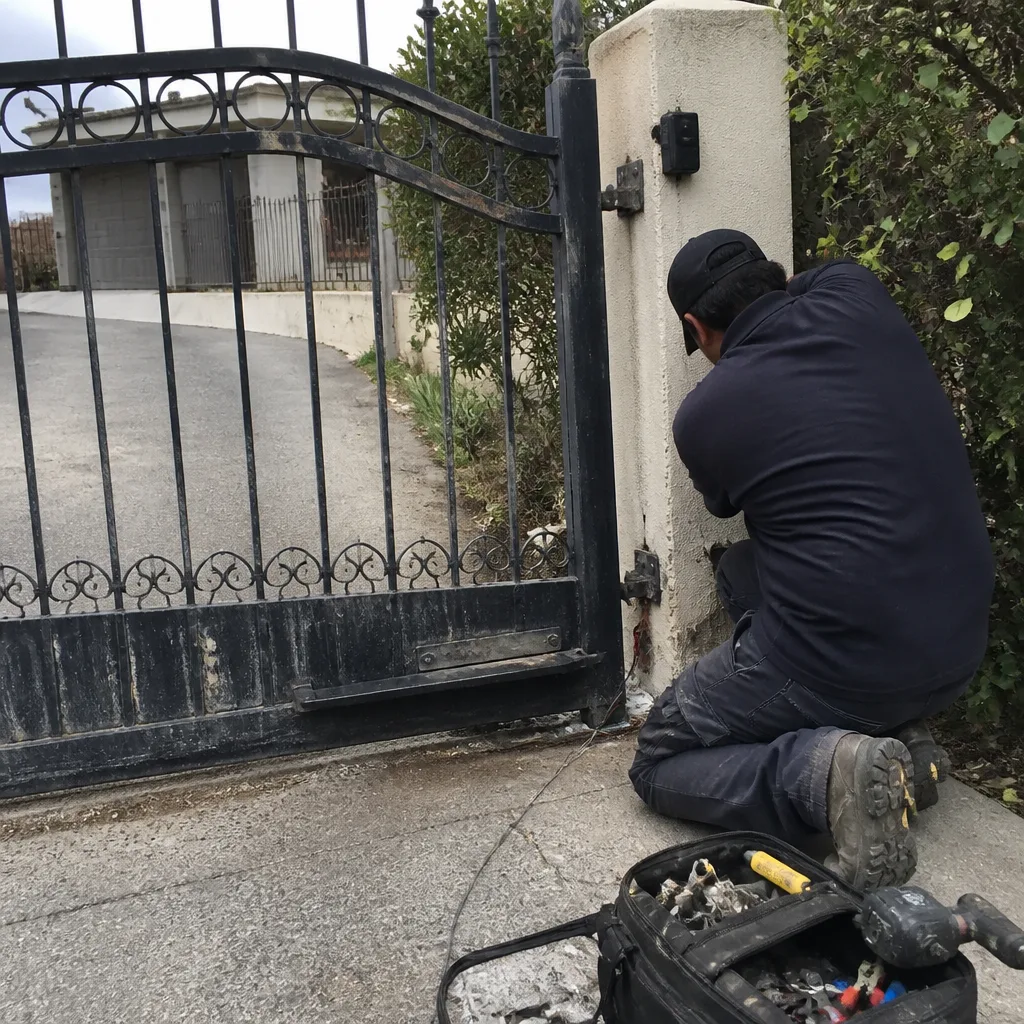 Before
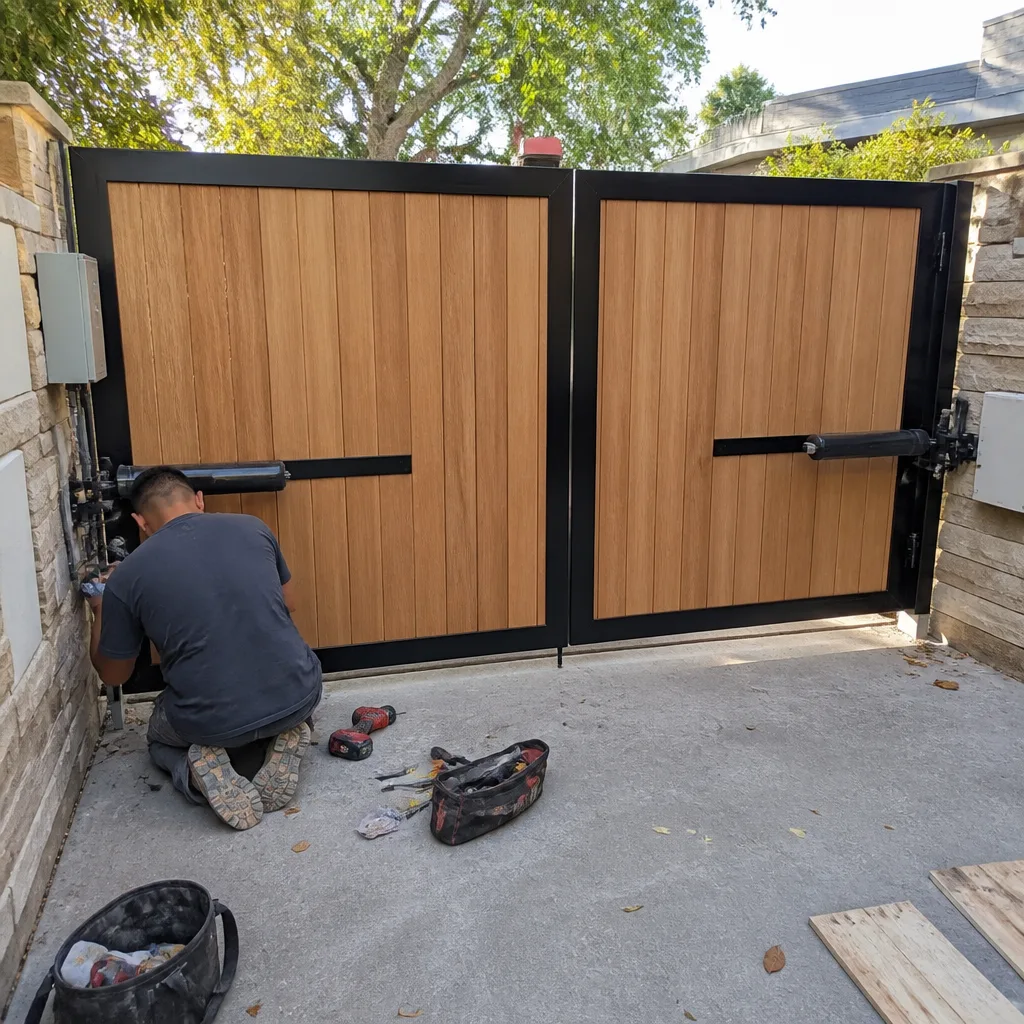 After
AfterGate Repair Permits, Codes & Inspections in CA: What You Need to Know
Here’s a number that surprises most California homeowners: roughly 8 out of 10 gate repairs we handle in Malibu need no permit at all. Hinge replacements, weld repairs, sensor swaps, even most motor replacements fall under what the California Building Code calls “repair” - work that keeps an existing gate functioning without changing its fundamental character. But the 2 out of 10 that do require a permit are almost always the jobs that got done without one, and that’s where the headaches start. A gate operator installed on a new circuit, a gate made longer or taller than the original, a driveway gate added where none existed before - these cross a line that most people don’t know exists until an escrow inspector finds it. This guide draws that line plainly, using the actual code language and the inspection reality we’ve seen in Los Angeles County for 29 years.
Quick Answer
Most our Gate Repair services in California do not require a permit - replacing hinges, welding a cracked frame, or swapping a like-for-like gate opener is exempt under the California Building Code’s repair provisions. However, if you’re installing a new gate operator where one didn’t exist, changing the gate’s size or footprint, adding new electrical work beyond a simple like-for-like swap, or building a new gate entirely, you’ll typically need a building permit and an inspection. In Los Angeles County, automated gate operators also trigger UL 325 entrapment safety requirements that the inspector will verify before signing off.
Table of Contents
- Repair vs. Alteration: The Line Most Homeowners Miss
- When a Gate Permit IS Required in California
- Automated Gate Operators and UL 325: What the Inspector Checks
- What LA County Building and Safety Specifically Requires
- How Unpermitted Gate Work Shows Up in a Sale (and What It Costs)
- Pulling a Permit Retroactively: A Step-by-Step Process
- Common Mistakes to Avoid
- When to Call a Professional
Repair vs. Alteration: The Line Most Homeowners Miss
The California Building Code uses one word to separate work that needs a permit from work that doesn’t: alteration. Section 105.2 of the CBC lists exemptions, and near the top of that list sits what most people call ordinary repair. The definition turns on whether you’re restoring something to its intended condition or changing what it is. A gate that sags because a hinge pin wore out gets a new hinge - that’s repair. A gate that sags because the driveway settled and someone welds a six-inch extension onto the bottom to make it taller - that’s an alteration, and it needs a permit.
The distinction matters more than most homeowners assume. We’ve walked onto properties in Point Dume where a previous owner “just fixed” a gate by widening the opening and hanging a larger leaf. Structurally fine. Permitting-wise, a problem. The gate’s footprint changed, the posts moved, and when the current owner refinanced, the lender’s drive-by flagged the work. The fix was simple - retroactive permit and inspection - but it took four weeks and the financing nearly fell through. A gate sags in the hinge post, not in the middle, and that is where we start. The code doesn’t care about the quality of the work; it cares about what the work changed.
What Counts as Repair (No Permit Needed)
- Replacing hinges, rollers, wheels, or track sections with like-for-like parts. If the new hinge fits the existing post and gate leaf without modifying either, you’re repairing.
- Welding a cracked gate frame or fixing a broken weld joint. Reattaching what came apart is repair. Adding new structural members is not.
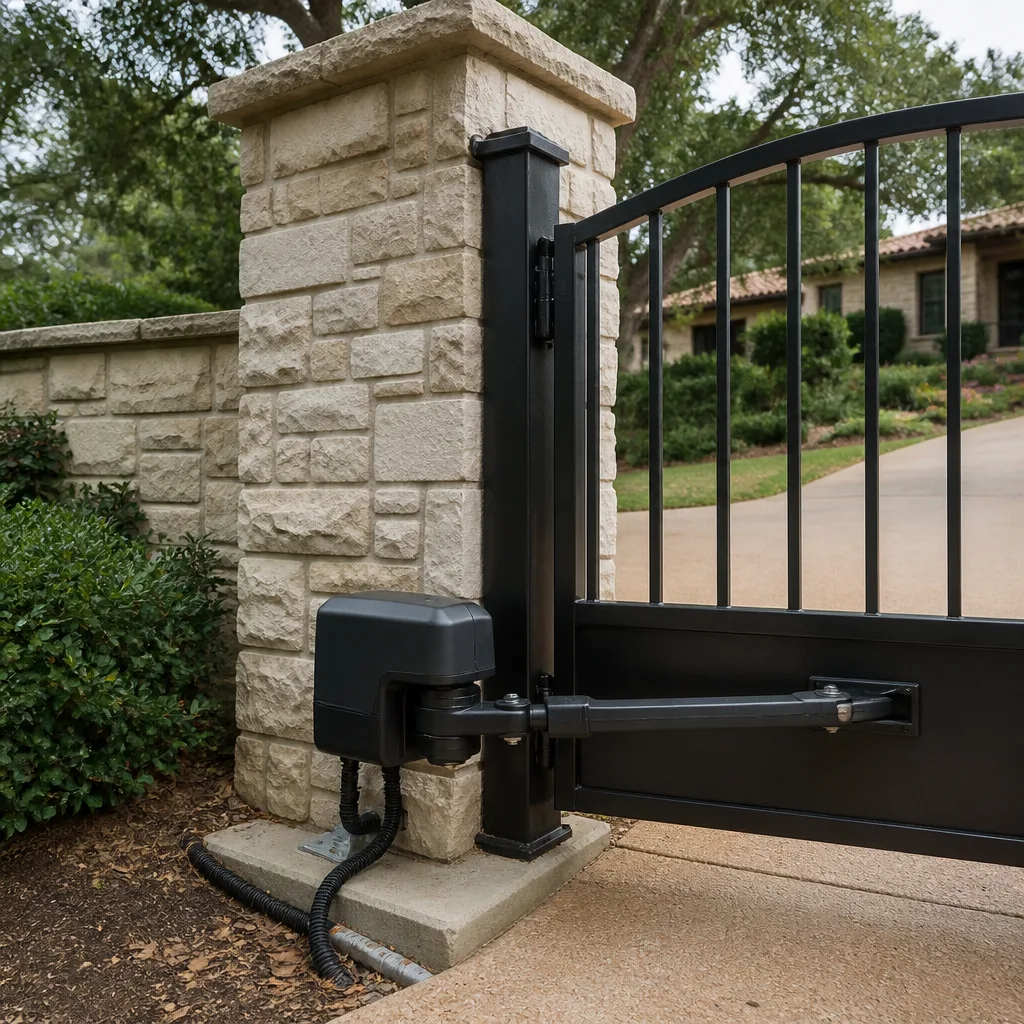
- Swapping a gate motor or opener for the same type and voltage. A LiftMaster arm operator coming off and a new LiftMaster arm operator going on, same circuit, same mounting position - that’s repair in most jurisdictions.
- Replacing safety sensors, keypads, or photocells that have failed. The operator stays, the safety components get renewed.
- Adjusting gate travel limits, force settings, or close timers. Tuning an existing system to keep working is maintenance, not construction.
One nuance worth stating plainly: replacing a broken gate leaf with an identical-size panel custom-welded to match is still repair, even though it’s a big job. The key is that the gate’s size, height, weight, and operating characteristics don’t change. We do this kind of work regularly - fixing the panel without replacing the post is exactly how you avoid a permit conversation where none belongs.
What Counts as Alteration (Permit Required)
- Installing a gate operator where the gate was previously manual. This is the most common trigger we see in Malibu. The moment you add an automated operator, you’re introducing electrical power and entrapment risk, and the county wants to verify both.
- Replacing a manual gate with an automated gate. Even if the posts stay, the system becomes an “automated vehicular gate” under UL 325, and that classification brings inspection requirements.
- Changing the gate’s height, width, or weight by more than a nominal amount. Adding a decorative topper that catches wind load, extending a leaf, or rebuilding a gate with heavier steel are alterations.
- Moving a gate post or changing the gate’s swing path. This changes the gate’s structural loading and potentially its relationship to the property line and sidewalk.
- Running new electrical circuits or adding significant new electrical load. If you’re pulling new wire from the panel to power a gate opener, that electrical work falls under the building permit umbrella.
Here’s the practical test we use when a Malibu homeowner asks whether their job needs a permit: does the finished gate do something it couldn’t do before, or occupy space it didn’t occupy before? If yes, call the county. If no, you’re repairing.
When a Gate Permit IS Required in California
The honest answer is that California has no single statewide rule for gate permits - authority rests with each city and county, and they adopt the California Building Code with their own amendments. That said, the pattern across Los Angeles County, including the City of Malibu, is remarkably consistent. You’ll need a permit in three clear situations: new gate construction, gate modification that changes size or structure, and the addition of an automated operator where none existed. You may need a permit for electrical work tied to an operator, depending on scope. Let’s walk through each with the numbers we actually see.
- New gate construction. Any gate that’s being built from scratch - a driveway gate, a pedestrian gate attached to a fence, a gate in a new fence run - triggers a building permit. The county or city reviews the design for wind load, structural attachment to posts, and setbacks. In practice, this costs anywhere from $300 to $800 in permit fees in the Malibu area, depending on valuation, plus whatever the plan review tacks on. It’s not the fee that surprises people; it’s that the review takes two to four weeks if the design is straightforward.
- Adding an automated operator to a manual gate. This is the one that catches homeowners off guard. You bought a Mighty Mule or a Ghost Controls kit online, bolted it to the post, ran an extension cord, and now the gate opens with a remote. Functionally done. Legally, you just installed an automated vehicular gate operator, and the California Electrical Code plus UL 325 standards now apply. The county expects a permit and an inspection that verifies entrapment protection.
- Modifying an existing gate’s size or structure. Making a driveway gate taller for privacy, extending a gate to close a gap, switching a swing gate to a slide configuration - these all change the gate’s structural load path and fall outside the repair exemption. The county considers this an alteration, which is defined as any change to a building or structure that modifies its size, configuration, or use.
- Replacing an operator with a different type or size. Swapping a like-for-like arm operator is repair. Replacing a 1/2 HP arm operator with a significantly larger sliding gate operator, or changing from an arm to a rack-and-pinion system, changes the gate’s operating characteristics and typically requires review. The practical test: if the new operator needs different mounting, different electrical requirements, or different safety sensor layouts, you’ve crossed into alteration territory.
What almost never requires a permit: repairing the existing gate’s physical components (hinges, frames, pickets, wheels), welding cracks, replacing like-for-like operators, painting, and routine adjustments. The guide from Gatewood Fence & Gate home covers the repair side in detail, but the summary above holds for any California jurisdiction that adopts the CBC without major amendments.
One more wrinkle for Malibu specifically: the city has its own Building Safety Division and enforces the California Building Standards Code with local amendments. Some of those amendments touch on coastal environmental constraints and view preservation, which occasionally affect gate height or placement when the gate sits in a view corridor. It’s not common, but it exists, and it’s the kind of local knowledge that keeps a project from stalling at plan review.
Automated Gate Operators and UL 325: What the Inspector Checks
If there’s one acronym that drives gate inspections in California, it’s UL 325. That’s the Underwriters Laboratories standard for automated gate operators, and since 2000 it has been the benchmark for entrapment protection on every driveway gate or pedestrian gate with a motor. When an inspector comes out to sign off on an automated gate in Malibu, they’re not admiring your welding. They’re verifying that the operator meets UL 325 safety requirements and that the installation matches what the permit says. Here’s what they check, in the order they typically check it.
- Entrapment protection devices. Every automated gate must have at least two independent means of entrapment protection. For a swing gate, that’s typically a pair of photocells (photo eyes) plus an inherent reversing mechanism in the operator. For a slide gate, it’s photocells across the gate opening plus a contact sensor or edge sensor on the leading and trailing edges. An inspector will physically block the photocell and watch the gate reverse or stop. If it doesn’t, you fail.
- Force and speed settings. The operator must be adjusted so that the closing force doesn’t exceed UL 325 limits. The inspector will often put a test object (or their hand, if they’re old-school) in the gate’s path and confirm the gate reverses within two seconds of contact. Gates that close too hard or too fast fail inspection.
- Swing gate edge sensors. On a swing gate, the hinge and latch areas are pinch points. UL 325 requires protection at those points - typically rubber edge sensors or guarded covers. The inspector will look for physical guards or sensors on both the hinge side and the latch side.
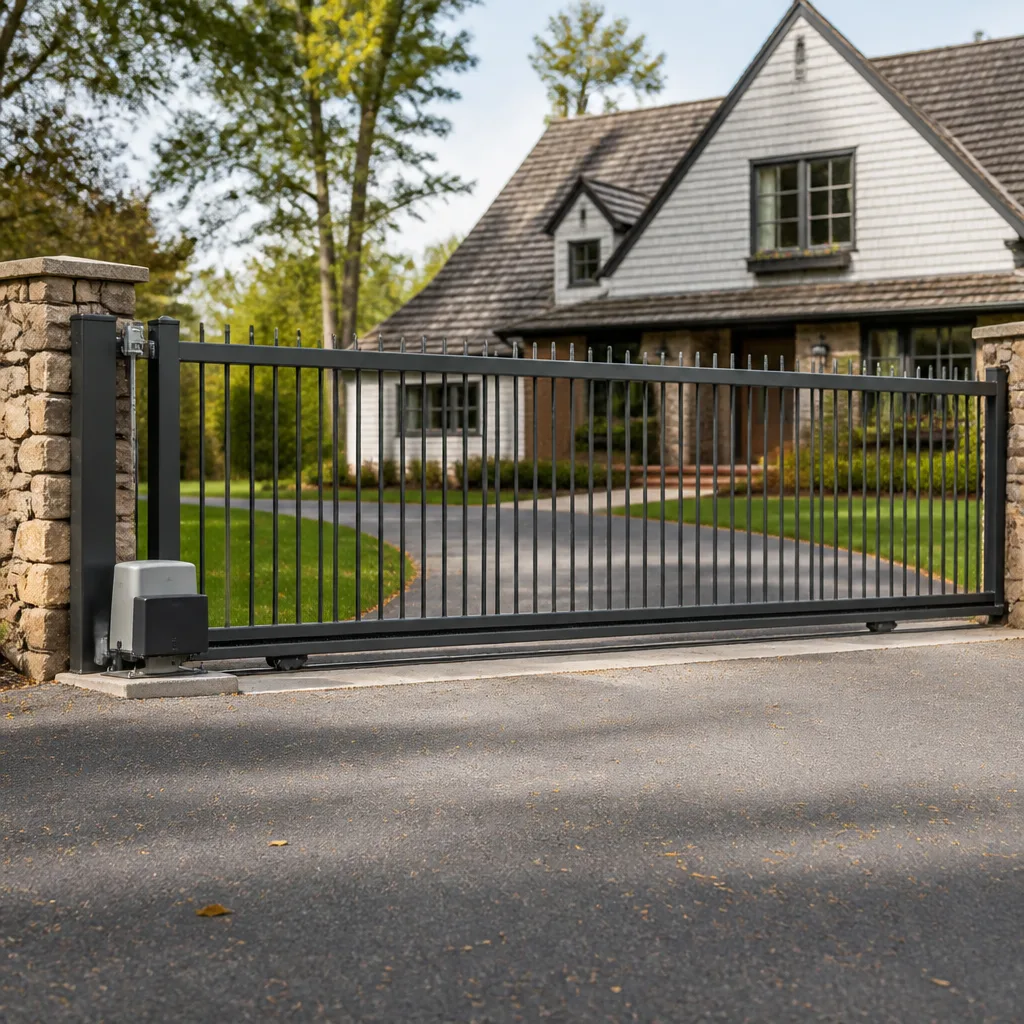
- Slide gate rollers and track guards. Slide gates have two distinct hazards: the rollers that can crush fingers and the gap between the gate and the post that can trap a child. The inspector will verify that roller guards are installed and that the opening gap meets code limits.
- Warning signage. UL 325 requires specific warning placards affixed to both sides of an automated gate. The inspector will check that they’re present and readable. Missing signage is an automatic correction notice.
- Electrical grounding and bonding. The operator circuit must be properly grounded, and the gate itself must be bonded if it’s metal. The electrical portion of the inspection follows the California Electrical Code, and a missing ground wire will fail you just as fast as a missing photocell.
In our experience, installations done without a permit fail roughly a third of the time on the first inspection - not because the work was bad, but because the person who did it didn’t know about a specific UL 325 requirement. The most common miss: only one photocell on a slide gate when two are required, or no edge sensors on a swing gate. Those are $150 to $400 fixes, but they stop the sign-off until they’re done. If you’re in the Malibu area and need Gate Motor & Opener in Malibu work done right the first time, the team at Gatewood Fence & Gate handles UL 325 compliance on every operator job.
What LA County Building and Safety Specifically Requires
Malibu contracts building services through Los Angeles County Building and Safety, which means the county’s permit process and inspection standards apply. If you’re pulling a permit for gate work in Malibu, here’s what you’re walking into, step by step.
- Permit application and plan review. For new gates or operator additions, you or your contractor submit a permit application with a site plan showing where the gate sits relative to the property line, the structure, and any easements. For a new automated operator, you’ll typically include the operator’s spec sheet and a simple wiring diagram. Plan review for a straightforward gate project usually runs 10 to 14 business days in our experience, though it can stretch to three weeks during busy periods.
- Fees. Permit fees are calculated from the project valuation, which is the total cost of materials and labor for the permitted work. For a typical automated gate operator addition, the permit and plan review fees in the Malibu area land between $400 and $900 all-in, not including the cost of any required corrections. Fewer than half the homeowners we talk to budget for this - the operator cost them $1,200, and the permit adds a third on top.
- Inspection scheduling. Once the work is done, you call or use the county’s online portal to schedule an inspection. In the Malibu area, inspection slots are typically one to three days out, sometimes longer after storms or during construction season. The inspector comes out, checks the work against the permit and code, and either signs off or leaves a correction note.
- Final sign-off. When the inspector approves the work, you get a final approval on the permit record. That approval is what matters later when you sell the house.
Los Angeles County also requires that any contractor performing work that requires a permit hold a valid California contractor’s license in the appropriate classification. For gate work, that’s typically a C-61/D28 (Doors, Gates, and Activating Devices) or a C-17 (Glazing) depending on scope, though general building contractors can also do gate work if it’s part of a larger project. The county can and will stop work on an unpermitted job if an inspector happens to drive by - it’s rare, but it happens, and the correction process is always more expensive than doing it right the first time.
One more note for Malibu homeowners: the county enforces the same UL 325 requirements discussed above, but coastal properties on small lots sometimes face an additional constraint - view preservation. If your gate project involves raising the height of a driveway gate, the county reviews it for consistency with local view-protection ordinances. It’s a Malibu-specific wrinkle that most national gate companies don’t know exists, and it’s the kind of thing that costs you a resubmit if you’re not aware of it ahead of time.
Those wondering about full replacement projects should read about Gate Installation in Malibu for a complete walkthrough of what the install itself involves, permit aside.
How Unpermitted Gate Work Shows Up in a Sale (and What It Costs)
Here’s the scenario we hear at least once a month: a Malibu homeowner is two weeks from closing escrow, the buyer’s home inspector flags an automated gate that was installed without a permit, and suddenly there’s a hold on the transaction. The buyer wants a clearance from the county. The seller didn’t know they needed a permit. Escrow is stalled, and everyone is looking for someone to fix it fast.
The Point Dume case mentioned at the top of this guide is typical. The gate operator itself had failed - or worn out - three years before the sale. The homeowner had a handyman replace it, and the work was genuinely fine. The operator worked, the sensors worked, no one got hurt. But the handyman didn’t pull a permit, and when the buyer’s inspector looked at the gate, they noted that the operator didn’t match the original permit record (because no new permit existed). The inspector flagged it as a potential unpermitted installation, and now the seller had a compliance problem.
The math is sobering. The original operator replacement cost about $400 in labor and a few hundred in parts. The retroactive permit, the UL 325 compliance corrections (in this case, a missing second photocell), the county inspection fees, and the seller’s credit for the buyer’s trouble came to just under $1,500. The repair cost was $400. The permit and inspection process to clear it cost more than that. And that’s a mild case - we’ve seen unpermitted gate installations hold up sales for three to four weeks when the county was backed up on inspections.
Unpermitted electrical work is the most common flag in an inspection. If a gate operator was installed on a new circuit without an electrical permit, that’s a red flag even if the mechanical work is exempt. Home inspectors in California are trained to look for exactly this. They’ll check the electrical panel for unlabeled circuits, look at the operator for UL markings, and compare the gate setup against what’s on the county’s permit record. When the records don’t match the field conditions, the deal slows down.
What does remediation actually cost? In the Malibu area, a retroactive permit and inspection for an unpermitted gate operator typically runs $800 to $2,500 all-in, including:
- Permit fees and plan review: $300 to $800
- UL 325 compliance corrections (sensors, edges, guards, signage): $150 to $1,000 depending on what’s missing
- Electrical corrections (grounding, bonding, circuit labeling): $100 to $500
- Re-inspection fees if the first inspection fails: $100 to $200 per visit
The time cost is often bigger than the dollar cost. Three to six weeks from application to final sign-off is normal when the county is processing a retroactive permit, and that’s three to six weeks of a stalled escrow if you didn’t catch it early. We’ve had sellers call us in a panic because their buyer set a 21-day close and the county was scheduling inspections two weeks out. The name is on the shop, and the shop is down the road - that is the oldest accountability there is, and it’s the reason we tell every homeowner to pull permits before they become someone else’s problem.
If you’re looking at Gate Repair in Malibu that touches anything electrical or structural, do the permit check before the work starts, not after the buyer’s inspector finds it.
Pulling a Permit Retroactively: A Step-by-Step Process
If you’ve had gate work done without a permit - or you bought a house where the previous owner did - you can fix it. The process is called pulling a retroactive permit, and it’s not as painful as most people assume. The county has dealt with this thousands of times. They’re not in the business of punishing homeowners; they’re in the business of ensuring that the work meets code now. Here’s the process we walk Malibu homeowners through:
- Document what’s there. Take photos of the gate, the operator, the sensors, the power source, and the surrounding area. Write down the operator’s make and model, the gate’s dimensions, and the gate’s approximate weight. This is what goes into the permit application.
- Determine the scope of work to be permitted. Are you permitting the entire gate installation, or just the operator? A gate that was installed 20 years ago and never permitted might be grandfathered in practice - but an operator added two years ago will need its own permit. The county will tell you what scope they need.
- Submit the permit application. In LA County, this is done online through the county’s building portal. The application asks for the property address, the scope of work, the project valuation, and a description of the gate system. Expect to pay the permit fee at this stage or at plan review.
- Schedule and pass the inspection. This is the step where most retroactive permits hit a snag, because the inspector is now looking at work that was done without oversight. Any UL 325 compliance gaps - missing sensors, missing edge guards, improper force settings - will be called out. You’ll correct them and get a re-inspection if needed.
- Receive final approval. Once the inspector signs off, the permit is closed and the record is clean. This is the document you’ll provide to a buyer’s agent or a lender if they ask.
What does it cost? Same fee schedule as a new permit, plus whatever corrections are needed. In the Malibu area, a retroactive permit for an automated gate operator typically lands between $800 and $2,000 all-in, with the correction work being the variable. The average homeowner we see spends about $1,200 total. That’s not nothing, but it’s a fraction of what a failed escrow costs.
One thing most people don’t realize: a retroactive permit does NOT mean the work is “approved as-is.” The inspector can and will require you to bring the work up to current code, even if the work met the code at the time it was done. A gate operator installed in 2015 that met UL 325 at the time may not meet the latest revision. The standard is current code, not the code that was in effect when the unpermitted work happened. That’s worth knowing before you start.
On Gate Installation in Malibu projects, Hal Gatewood and his crew pull permits as a matter of course. On repair work, they’ll tell you honestly whether the job crosses the permit line or not - and that honesty has saved more than a few escrows.
Common Mistakes to Avoid
- Skipping the permit because the job “looks simple.” An automated operator is never simple from a code perspective. UL 325 compliance, electrical grounding, entrapment protection - these aren’t optional, and the inspector will check each one. In Malibu, we see this most often on weekend DIY projects that get flagged years later.
- Assuming a handyman’s work will pass inspection. Handymen can’t pull permits in California - they don’t hold contractor’s licenses. When the county discovers unpermitted work that a handyman did, the homeowner is the one who carries the correction. We regularly fix installations where the handyman did neat work but didn’t know UL 325 required a second sensor.
- Not budgeting for permit fees. The operator kit cost $1,100. The permit adds $400 to $900. If you didn’t plan for that, the project just got more expensive than the quote. Hal’s crew includes the permit in the estimate when the job requires one - no surprises at the door.
- Replacing an operator with a different brand or type without checking permit requirements. Swapping a LiftMaster arm operator for another LiftMaster arm operator is repair. Swapping that LiftMaster arm for a BFT slide gate operator is not. The type change triggers a permit conversation.
- Removing safety sensors because they’re “annoying.” Photocells that cause false reversals are annoying. Removing them is a UL 325 violation and an entrapment hazard. The fix is adjusting or replacing the sensor, not deleting it. Show me the gate closing on its own and I’ll show you where it’s failing.
- Waiting until escrow opens to address unpermitted work. The worst time to pull a retroactive permit is when a buyer is waiting. The county’s timeline is the county’s timeline, and no amount of pleading speeds up an inspection. Do it when you have time on your side, not when you don’t.
- Assuming all Malibu gate work is exempt because “it’s just a gate.” Manual gates that don’t change size or structure are exempt. Once you add power or change the footprint, you’re in permit territory. The simplest way to check: call the building department and describe the job. They’ll tell you in five minutes what took a thousand words to explain here.
When to Call a Professional
Call a professional when the gate work touches electricity, changes the gate’s structural load, or introduces an entrapment risk - our How to Hire a Gate Repair Contractor in Malibu: A Step-by-Step Guide walks you through exactly what to look for. That means any new operator installation, any operator replacement that changes type or size, any new electrical circuit, any post replacement, and any gate fabrication that changes height or width. If you’re unsure whether your job crosses the line, call the building department first and a gate contractor second - in that order. For a second opinion on what the county says, Gatewood Fence & Gate offers free estimates in Malibu - call (559) 314-7708 and a live person answers, 24 hours a day. Hal Gatewood has been at this since 2001, and he’ll tell you straight whether your job needs a permit and what the inspection will look for.
Frequently Asked Questions
No permit is required if you’re replacing a gate motor with the same type and voltage, on the same circuit, with no changes to the gate’s operating characteristics - that’s classified as repair under the California Building Code. The permit is triggered when you replace a manual gate with an automated one, change operator types, or add new electrical work. Call (559) 314-7708 to get a straight answer on your specific situation.
Gate permit fees in LA County, including Malibu, typically run $300 to $900 for a new operator installation or gate alteration, calculated from the project valuation. Retroactive permits fall in the same range plus correction costs. For an exact figure on your project, call the county building department with your property address and a description of the work.
UL 325 is the Underwriters Laboratories safety standard for automated gate operators, and California building codes require every automated gate to comply with it. The standard sets requirements for entrapment protection (photocells, edge sensors, force limits), safety signage, and operator design. An inspector verifies UL 325 compliance before signing off on a permit.
You can sell - but the unpermitted work will likely surface in the buyer’s inspection, and many lenders and buyers will require it to be cleared before closing. Clearing it means pulling a retroactive permit, making UL 325 corrections if needed, and passing an inspection, which typically takes three to six weeks and costs $800 to $2,500 in the Malibu area.
For a straightforward gate project, plan on 10 to 14 business days for plan review plus one to three days to schedule the inspection once the work is complete. During busy construction periods, the timeline can stretch to three weeks or more. Retroactive permits follow the same timeline, which is why starting early matters.
Yes. Gatewood Fence & Gate pulls permits on every job that requires one, and Hal Gatewood will tell you upfront whether your job crosses the permit line or not. The estimate includes the permit cost when it applies - the price you’re quoted is the price you pay. Call (559) 314-7708 for a free estimate and a straight answer.
The Bottom Line
Most gate repairs in California don’t need a permit, and knowing where that line sits saves you money and time. For more guides & resources on keeping your gate compliant and safe, see our blog. But when a gate job crosses into alteration territory - a new operator, a changed footprint, new electrical work - the permit isn’t a bureaucratic nuisance; it’s the record that keeps your property saleable and your gate safe. In Malibu, the county’s rules draw the line clearly, and UL 325 sets the safety bar. The mistakes we see most often are avoidable ones: skipping the permit on an operator install, letting a handyman do electrical work, and waiting until escrow opens to address unpermitted work. If you’re not sure where your job falls, call (559) 314-7708. A live person answers, and the answer you get is straight - the way it’s been since 2001.
Written by Hal Gatewood, Owner at Gatewood Fence & Gate, serving Malibu since 2001.