
Last updated August 26, 2026
Free on-site gate assessment - hinges, posts, and your LiftMaster or Nice gate operator checked before anything is quoted
The assessment is free and the quote is the invoice.
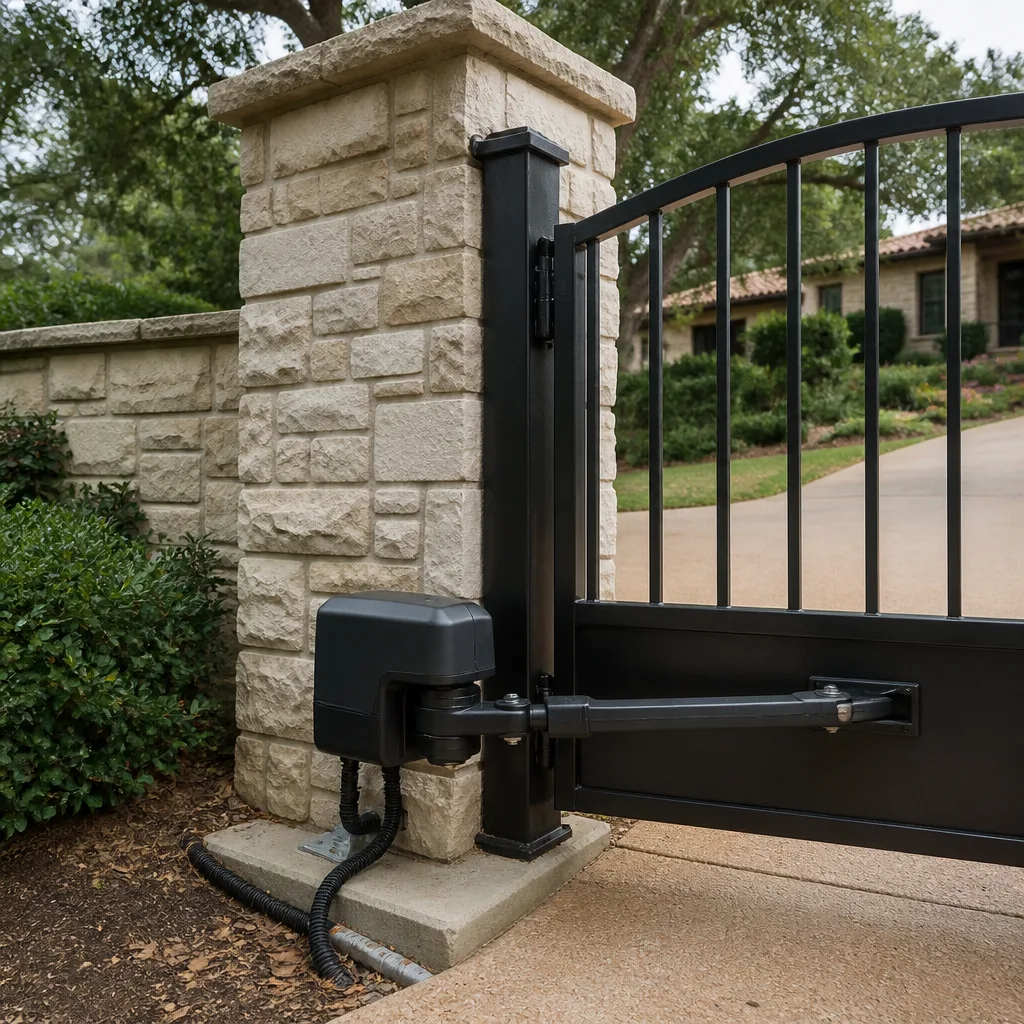
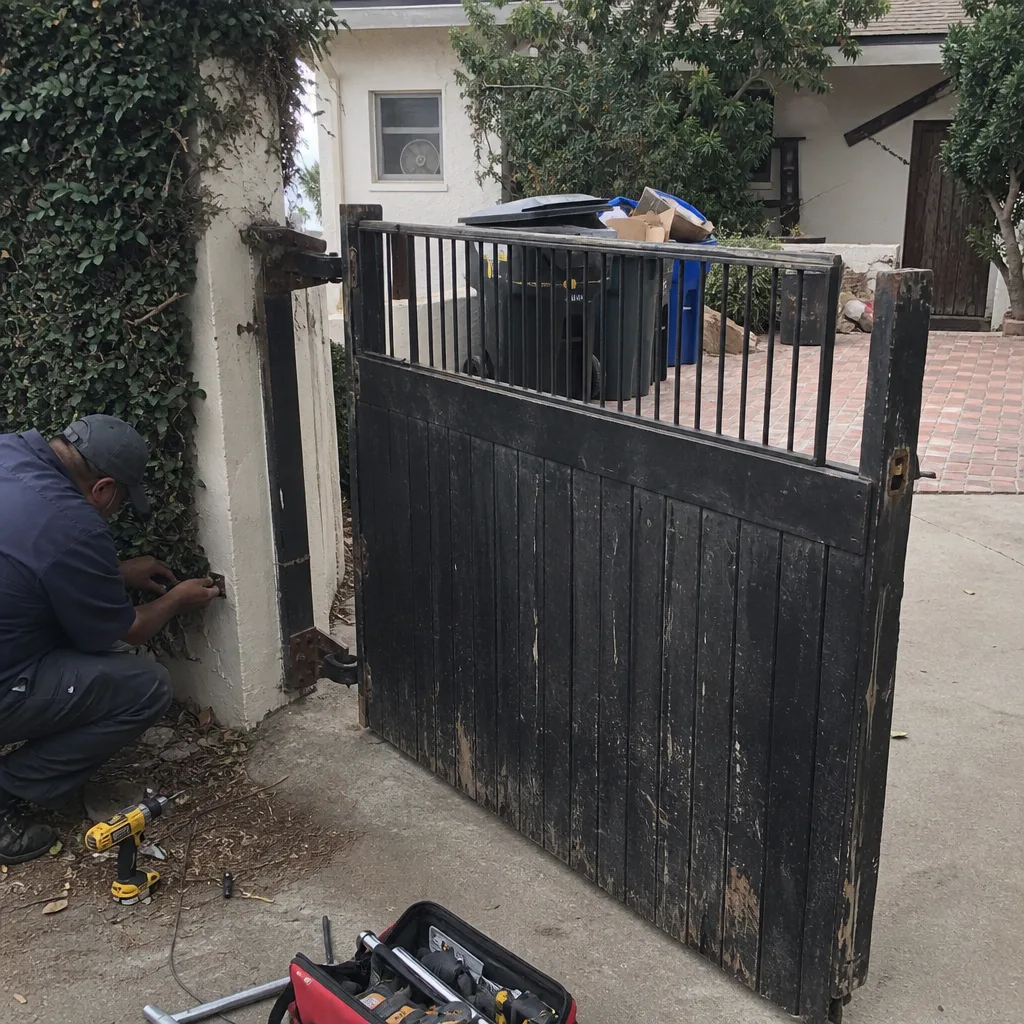 Before
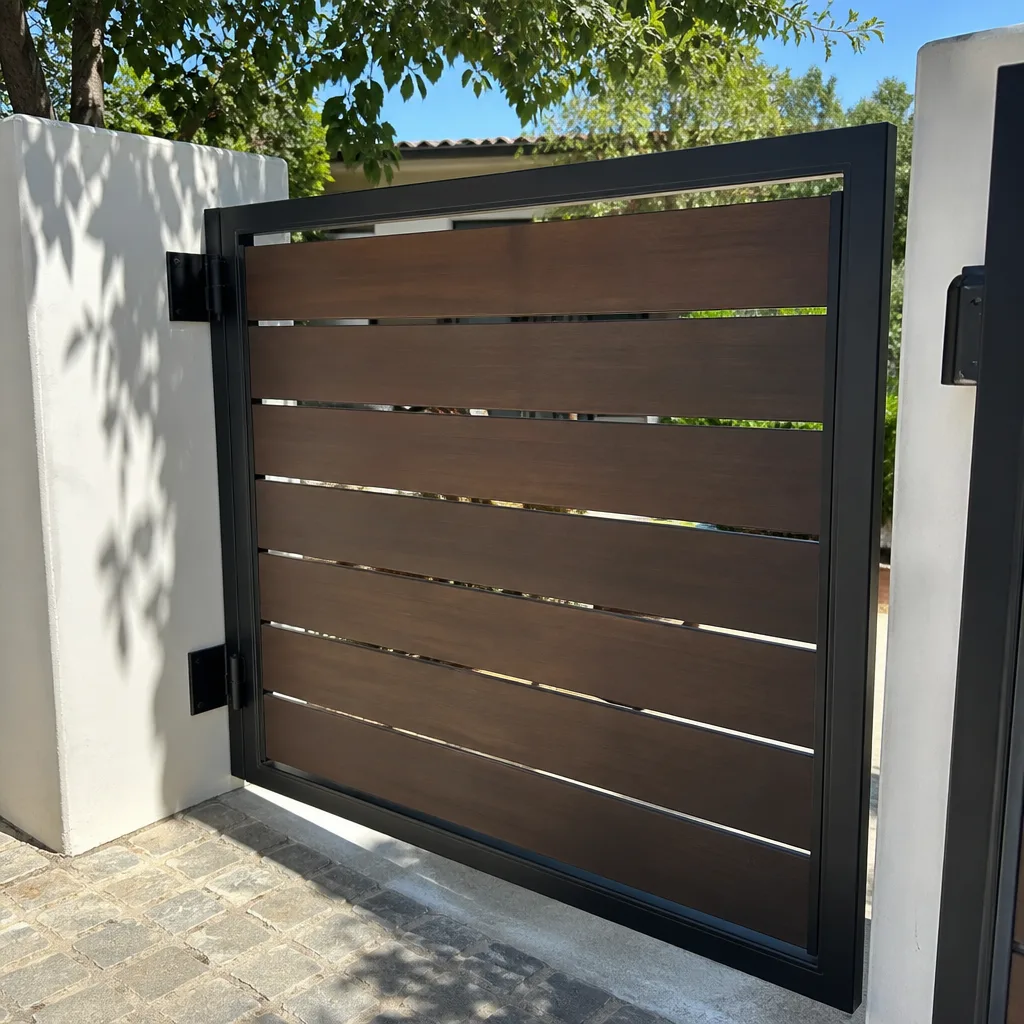 After
After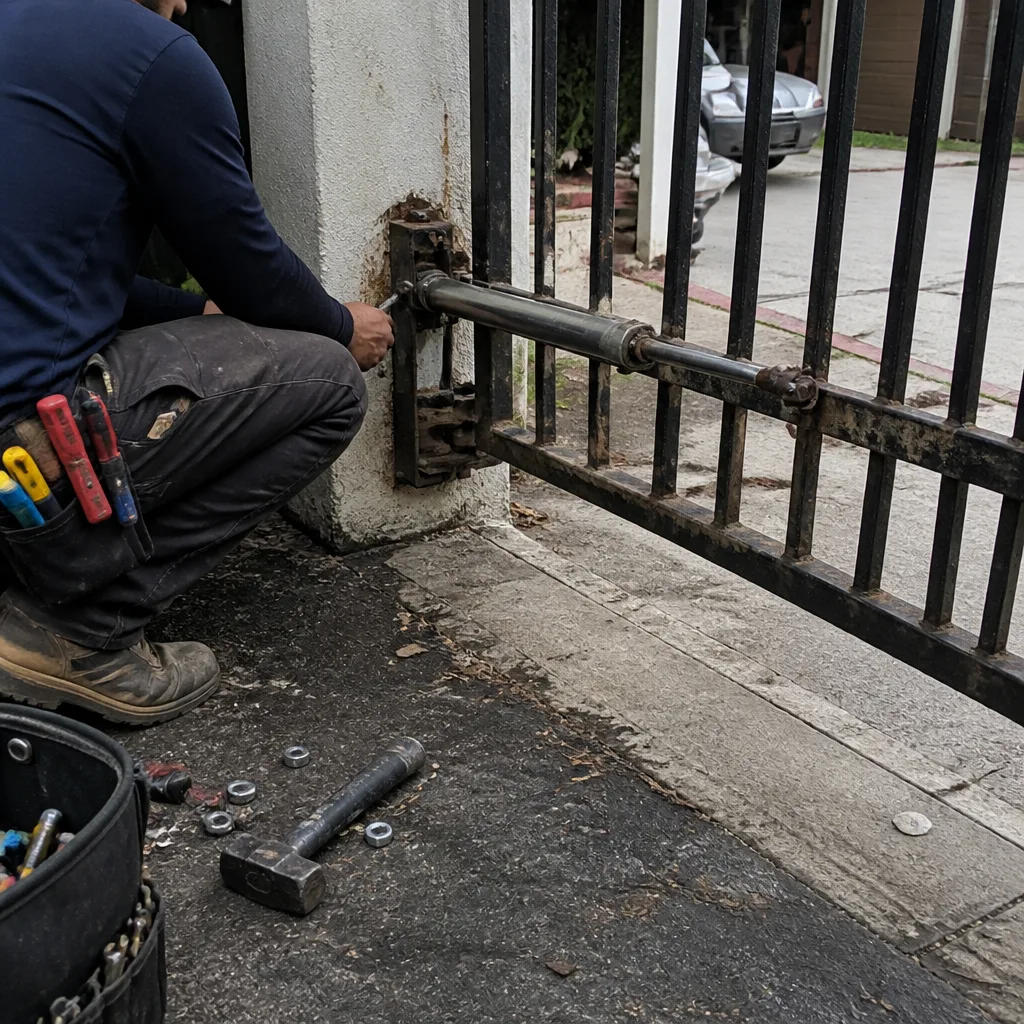 Before
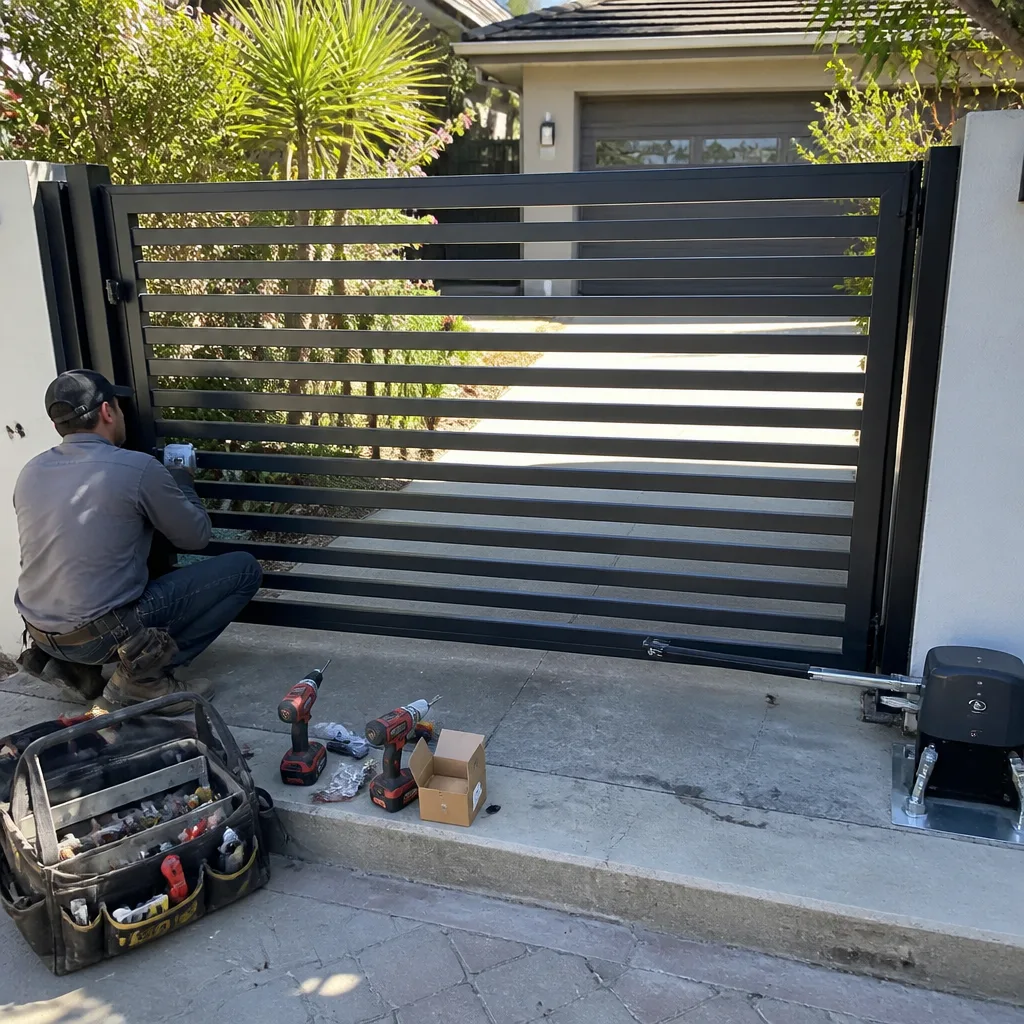 After
After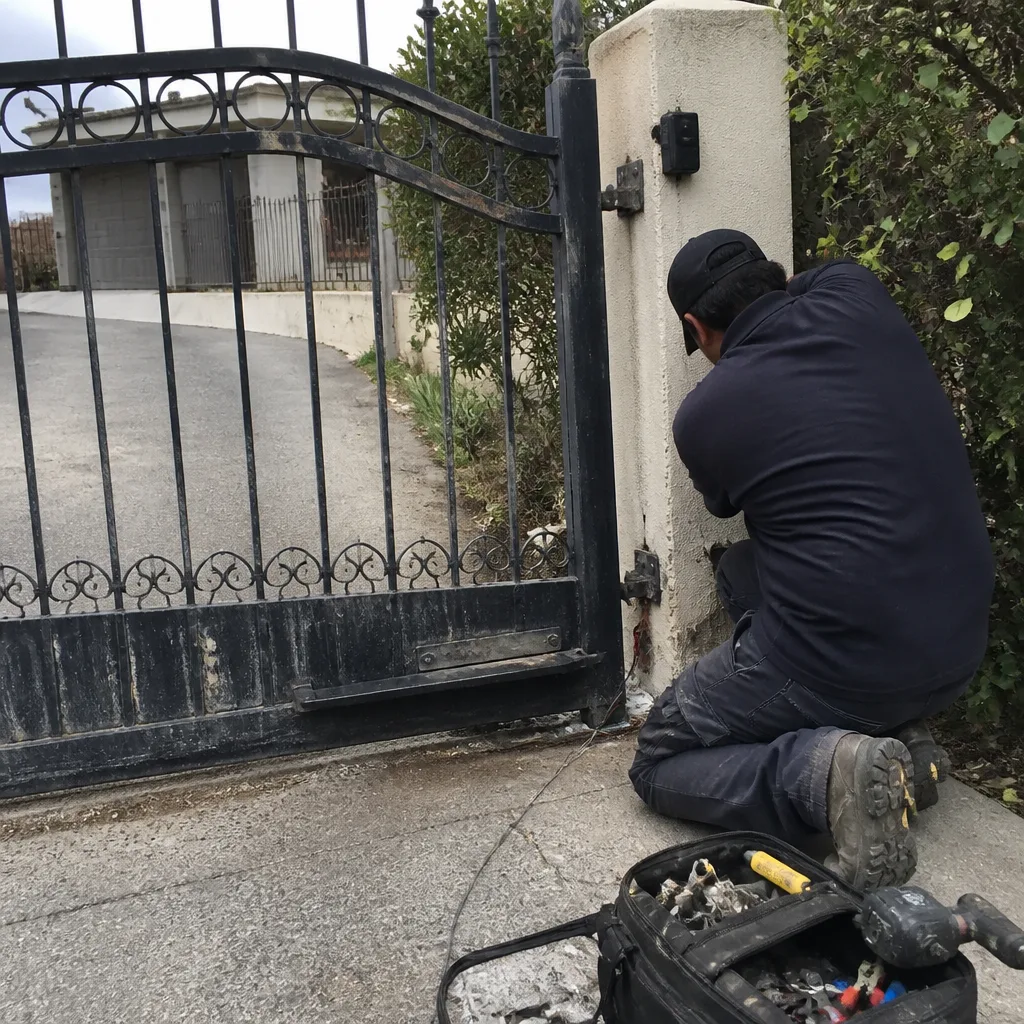 Before
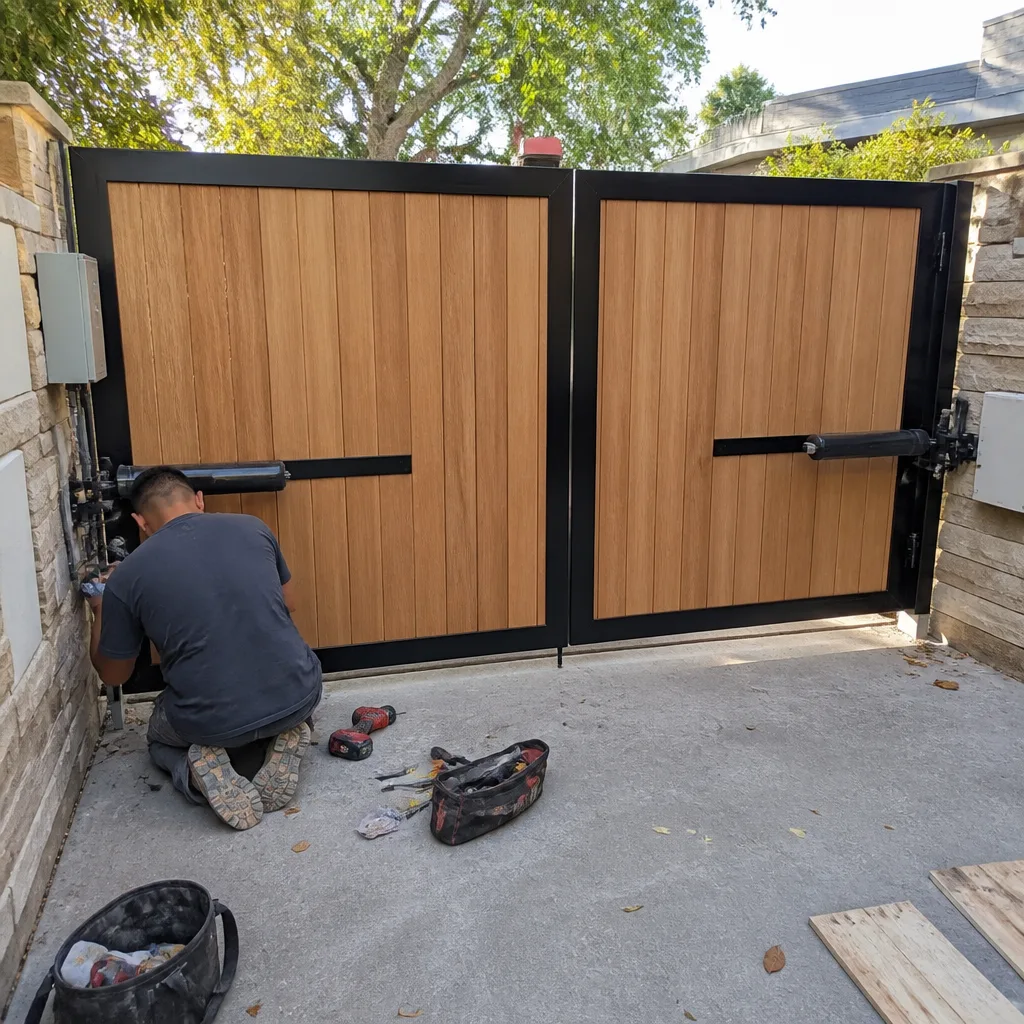 After
AfterHow to Hire a Gate Repair Contractor in Malibu: A Step-by-Step Guide
I’ve re-done work left behind by contractors whose websites looked better than mine. A polished site and a Yelp ad do not mean the guy who shows up knows the difference between a limit switch adjustment and a motor that needs replacing. In Malibu, where a driveway gate can cost more than a car, that difference can hit your wallet for thousands. This complete guide to gate repair in Malibu walks you through exactly how to separate a real gate mechanic from someone who bought a truck and printed business cards last spring. You’ll learn the four questions to ask before anyone steps onto your property, how to verify a license in under three minutes, and the contract language that signals a company planning to swap your gate instead of fix it.
Quick Answer
To hire a gate repair contractor in Malibu, confirm they hold a valid California C-61/D-28 contractor license for gate work, carry liability insurance plus inland marine coverage, provide a written estimate with a not-to-exceed price before starting, and can show you proof they’ve repaired gates in coastal conditions like Malibu’s salt air and shifting hillside soil. Ask whether they repair on site or haul the gate away; a shop that welds in your driveway saves you money and lets you watch the work.
Table of Contents
- Four Questions to Ask Before Anyone Sets Foot on Your Property
- How to Check a Gate Contractor’s License Through the CSLB in Under Three Minutes
- Why Owner-Operated Matters More for Gate Repair Than for General Contracting
- What a Legitimate Written Estimate Includes Versus a Ballpark Quote
- Red Flags in Contract Language That Signal a Replacement-Only Company
- What Malibu’s Climate and Terrain Do to Gates That Other Markets Don’t Deal With
- Insurance Questions Most Homeowners Never Ask and Why They Matter
- What to Expect After You Hire: The Repair Timeline Explained
Four Questions to Ask Before Anyone Sets Foot on Your Property
Most homeowners start with “How much?” That’s the wrong first question. Price tells you almost nothing until you know who you’re dealing with. In Malibu, we regularly get calls from people who paid a bargain rate in February and needed the same repair done again in June. A saging gate post set in expansive soil doesn’t care what you paid the first time. The post shifts, the gate drags, and you’re back on the phone.
Here are the four questions that filter out the amateurs faster than any price comparison.
- “What’s your contractor license number?” A licensed contractor should rattle this off without hesitation. If they fumble, that’s your answer. In California, gate repair falls under the C-61/D-28 classification, which covers locksmithing and gate work. Ask for the number, then verify it yourself before they arrive. More on that below.
- “Do you carry inland marine coverage?” This is the question nobody asks, and it’s the one that matters most for Malibu. Your homeowner’s policy typically doesn’t cover a contractor’s tools or your gate if it’s damaged mid-repair and the contractor has no coverage of their own. Inland marine insurance covers property in transit or at a job site not owned by the contractor. For a high-value Malibu gate, a contractor without it is a liability walking up your driveway.
- “Do you repair on site or haul the gate to your shop?” On-site repair means you watch the work happen. Haul-away repair means you trust a shop you’ve never seen. At Gatewood Fence & Gate home, we weld in the driveway. If a hinge plate is cracked, you watch it get cut out and a new one burned in. That’s transparency you can’t fake.
- “What’s your warranty, in writing?” Anyone can say “we stand behind our work.” Get it on paper. A written warranty with a specific time window and a specific remedy means the contractor expects the repair to hold. A vague “we’ll make it right” is worth exactly what it costs to say it.
Ask these four questions on the phone before you schedule anything. The way someone answers tells you more than three quotes ever will.
How to Check a Gate Contractor’s License Through the CSLB in Under Three Minutes
The California Contractors State License Board (CSLB) keeps a public database of every licensed contractor in the state. Checking it takes less time than reading this section, and it’s the single fastest way to eliminate most of the bad actors in Malibu’s gate repair market.
Here’s the step-by-step process:
- Go to the CSLB website. There’s a search box on the homepage that says “Check a Contractor License.”
- Enter the contractor’s name or license number. If you have the number, use it. Numbers don’t have spelling variations. Names do.
- Look at the license classification. For gate work, you want to see C-61/D-28. A general building contractor license (B) can legally do some gate work, but the D-28 classification exists specifically because gates and access systems have their own failure modes. A contractor who has maintained the D-28 for years has a track record you can verify.
- Check the license status. It should say “Active.” If it says “Expired,” “Suspended,” or “Revoked,” stop right there and call someone else.
- Scroll down to see workers’ compensation insurance status. If the contractor has employees and no workers’ comp, you could be on the hook if someone gets hurt on your property. If the contractor is a sole proprietor with no employees, they may be exempt. The CSLB page will show this.
- Note the license issue date. A contractor who’s held the same license since 2001 has survived market cycles, housing downturns, and enough angry customers to have learned how to do the job right. A license issued last year doesn’t mean the person can’t weld. It does mean they haven’t proven it yet.
We publish our license number on every invoice and on our shop. Hal Gatewood’s name is on the shop. You’re welcome to look us up on the CSLB the same way we’d encourage you to look up anyone else. That’s the point of the system.
Why Owner-Operated Matters More for Gate Repair Than for General Contracting
Here’s the thing about gate repair that most people don’t realize until it’s too late. A gate is a mechanical system under constant stress. Every opening and closing cycle wears on the hinges, stresses the motor, flexes the frame. It’s not like a fence post that sits there. It moves, and moving parts fail.
An owner-operated gate company means the person who answers the phone is the person who diagnosed the failure is the person who will weld the fix. There’s no game of telephone between a salesperson who promised one thing and a subcontracted crew who was hired for the day and doesn’t care what happens next month. In our experience, that’s the single biggest predictor of whether a repair holds.
Here’s what to ask to verify a company is actually owner-operated:
- Ask who will show up. If the answer is “a technician,” ask who the technician answers to. If the answer is “I’ll be there myself,” you’ve found a real owner.
- Look up the physical address. A published street address you can drive to, not a PO box, is a strong signal. It means the person has a reputation in a specific place. If they do bad work, the neighbors will know.
- Check how long they’ve held the same business name. Company names change when companies get sued or rebrand to escape bad reviews. A business that’s kept the same name and the same license issue date for over two decades has a history worth checking.
In Malibu, where property values create a magnet for out-of-town contractors from the Valley and beyond, a locally owned shop with a published address is not a small thing. It’s the difference between someone who will answer the phone in three years and someone whose number stops working the day after you pay.
We’ve been owner-operated since 2001. Hal Gatewood’s name is on the shop, and the shop is down the road. That is the oldest accountability there is. You can drive there and look him in the eye. Try doing that with a call center.
What a Legitimate Written Estimate Includes Versus a Ballpark Quote
A ballpark quote is a phone guess. A written estimate is a contract in waiting. The difference matters because in Malibu, the difference between a ballpark quote and the final invoice can be the price of a used car, and the homeowner is the one holding the bag.
Here’s what a legitimate written estimate includes:
- Specific scope of work. Not “repair gate.” It should say “cut out cracked hinge plate, fabricate new plate from 3/16-inch steel, weld in place, grind flush, prime and paint.” If the estimate doesn’t say what they’re going to do, they don’t know what they’re going to do.
- Part numbers or descriptions. If a motor is being replaced, the estimate should say which motor. LiftMaster, FAAC, BFT, Linear. These are different motors with different prices. “New motor” means nothing. A specific brand and model gives you something to verify.
- Not-to-exceed price. This is the key protection. A written estimate should state the maximum you’ll pay before any additional work is authorized in writing. If the contractor finds something unexpected mid-repair, they should stop and come talk to you, not keep working and add it to the invoice.
- Timeline. Not a vague “sometime next week.” A written estimate should say when work starts and how long it’s expected to take. Gate repairs in Malibu can involve waiting for specialty parts from manufacturers like FAAC or BFT, so a realistic timeline is a sign of experience, not delay.
- Warranty terms. In writing. Specific duration, specific remedy. Our Gate Repair in Malibu work carries the 90-Day Done Right Promise stamped in writing on every job. One call brings Hal back. No runaround.
- Payment terms. When is payment due? A contractor asking for full payment up front on a repair is a red flag. A reasonable deposit for parts is normal. Full payment before work starts is not.
At Gatewood Fence & Gate, the price quoted is the price you pay. It’s agreed before any work starts, in writing. If the job costs more than the estimate, Hal eats the difference. That’s not a guarantee buried in fine print. It’s the way the shop has run since 2001.
Red Flags in Contract Language That Signal a Replacement-Only Company
Some companies don’t fix gates. They sell new ones. The contract language usually gives them away before they ever touch your gate. Here’s what to look for, and what to do when you see it.
- “Gate is beyond economical repair.” If this appears in a contract before anyone has disassembled anything, run. No one can diagnose a gate as beyond repair from a photo or a driveway glance. We’ve fixed gates in Malibu that three other companies swore needed to be replaced. A cracked hinge post is a weld. A failed motor is a swap. “Beyond economical repair” usually means “we don’t know how to fix it and we’d rather sell you a new one.”
- Vague references to “industry standards.” A contract that says work will be done “to industry standards” without specifying which standards is a blank check. A real estimate says “welds per AWS D1.1” or “post set in concrete per manufacturer specification.” Specifics are accountability. Vague is cover.
- “Additional work may be required” without a not-to-exceed clause. This is the classic bait-and-switch. The phone quote was $400. The contract has an open-ended provision for “additional work as needed.” The final invoice is $1,400. Any contract with this language should include a not-to-exceed figure or a requirement for written authorization before any additional work proceeds.
- Large up-front deposit on a repair. Deposits are normal for Gate Installation in Malibu, where materials are ordered and custom fabrication takes time. They’re not normal for a repair that uses a part from the truck. A repair contractor asking for 50% down before they’ve even looked at the gate is either undercapitalized or planning to disappear.
- No warranty language at all. The absence of a warranty is a warranty against you. If a contractor won’t put their guarantee in writing, they don’t have one.
The bottom line: read the estimate before you sign it. A gate repair contractor in Malibu who does good work doesn’t need weasel language. The work speaks for itself, and the written promise backs it up.
What Malibu’s Climate and Terrain Do to Gates That Other Markets Don’t Deal With
Malibu is not the Valley. It’s not Westlake. It’s not even Santa Monica, which is ten miles down the coast but a different world in terms of what the air does to metal. A gate repair contractor who learned the trade inland will misdiagnose Malibu gate failures more often than they’d ever admit.
Here’s what Malibu specifically throws at gates:
- Salt air corrosion. Every morning the marine layer rolls in and deposits a fine film of salt on everything metal in its path. Hinges, hinge plates, motor housings, chain drives, and aluminum frames all corrode faster here than they do ten miles east. We’ve seen gate motors in Malibu with control boards corroded to the point of failure within five years of installation, while the same model inland runs for a decade. A contractor who doesn’t understand marine corrosion will replace a motor when the real fix is relocating the control board out of the salt zone.
- Expansive hillside soil. Malibu is built on slopes, and slopes move. The clay-heavy soil expands when it rains and contracts when it dries, and every cycle shifts gate posts a fraction of a degree. Over years, fractions add up. A gate that drags on the latch side is often a post that’s rotated in the ground, not a hinge that’s worn out. Fix the panel without the post and you’ll fix it twice. A contractor without Malibu experience will keep replacing hinges and bearings while the post keeps moving.
- Steep driveway angles. A lot of Malibu driveways climb. A gate on a slope puts different stress on the motor and the hinge geometry than a gate on flat ground. The motor works harder. The gate wants to swing downhill. Limit switches need different calibration. A contractor who’s never worked a slope will set the limits wrong and the gate will overtravel, slamming into the post until something else breaks.
- Wildfire defensible space requirements. Some Malibu properties fall under fire-hardening requirements that affect gate setbacks and access for emergency vehicles. A competent contractor knows the local Code Fire Marshal’s access requirements and won’t install a gate that blocks a fire truck. A clueless one will sell you a gate that looks good and gets flagged next inspection.
When you’re vetting a contractor, ask if they’ve worked on Malibu hillsides or coastal properties before. If they hesitate, that’s information. We’ve been doing Gate Motor & Opener in Malibu work since 2001. We know what the salt does to a FAAC or BFT control board because we’ve replaced enough of them in coastal properties to recognize the failure pattern before it kills the motor.
Insurance Questions Most Homeowners Never Ask and Why They Matter
Licensing tells you the contractor is legally allowed to work. Insurance tells you what happens when something goes wrong. In Malibu, where a custom gate can run into five figures, that’s not a hypothetical question.
Here’s the insurance stack a legitimate gate repair contractor should carry:
- General liability insurance. Minium $1 million. This covers damage to your property caused by the contractor’s work. If a welding spark catches something and your driveway gate is ruined, their liability policy pays.
- Workers’ compensation insurance. Covers injuries to the contractor’s employees while working on your property. Without it, you could be sued for medical bills if someone gets hurt on your driveway. California requires workers’ comp for contractors with employees. Ask to see the certificate.
- Inland marine insurance. This is the one nobody asks about, and it’s the one that matters most for high-value gate work. Inland marine covers property in transit or at a job site not owned by the contractor. If a contractor removes a section of your gate to weld it and their truck gets stolen, their liability policy might not cover it. Their inland marine policy does. A contractor working on Malibu gates without inland marine is asking you to carry risk you never agreed to.
- Auto insurance. Their vehicle is an extension of their business. If a contractor’s truck rolls down your driveway and into your fence, their commercial auto policy should cover it.
Ask for certificates of insurance before work starts. A legitimate contractor will send them without complaint. We carry all of the above, and we’ll provide certificates on request. It takes one phone call and it protects both of us.
One more thing: verify the insurance is current. Certificates expire. A policy that lapsed in March doesn’t help you in July. The certificate should show an active policy period. If it’s expired, ask for a renewed one.
What to Expect After You Hire: The Repair Timeline Explained
So you’ve asked the four questions, checked the license, read the estimate, verified the insurance, and hired a contractor. What happens next? Here’s the timeline of a typical gate repair in Malibu, from signed estimate to a gate that works.
- On-site diagnosis. The contractor shows up and examines the gate in person. Not a phone diagnosis. Not a photo estimate. In person, with the gate moving or failing to move. This is where the real problem gets identified. A gate sags in the hinge post, not in the middle, and that is where the work starts.
- Written estimate you can read. After diagnosis, you get a written estimate with the specific scope of work, the parts to be used, and a not-to-exceed price. You’re not pressured to sign. You’re not told the price might change. You read it, you ask questions, you sign.
- Parts procurement. If the repair needs a specific part from a manufacturer like LiftMaster, FAAC, BFT, or Linear, there may be a wait. Most common parts are stocked locally. Specialty parts ship from the manufacturer. A good contractor tells you the lead time up front.
- On-site repair. The work happens in your driveway. Welding is done on site. The gate doesn’t leave your property. You can watch if you want to. A gate that’s hauled away is a gate you can’t inspect.
- Testing and adjustment. After the repair, the gate is cycled multiple times. Limit switches are set. Safety sensors are checked. The closing force is adjusted so the gate stops if it meets resistance. We cycle a gate at least a dozen times before we call the job done. A gate that works once but fails on the tenth cycle wasn’t fixed.
- Written warranty. You get the warranty in writing. Our 90-Day Done Right Promise says it plainly: if it’s not done right, we make it right. One call brings Hal back. No runaround, no “it must have been something else.”
That’s what the process should look like. If a contractor skips any of those steps, you’ve got a reason to stop and ask why.
Common Mistakes to Avoid
- Hiring based on the lowest quote. Gate repair is not a commodity. Two contractors can look at the same Malibu gate and give quotes $600 apart because one of them diagnosed the actual problem and the other one is guessing. The cheap quote is often the one that doesn’t fix the root cause, and you’ll pay again in six months.
- Skipping the license verification. It takes three minutes. Not doing it is like buying a used car without checking the VIN. A contractor with no license or an expired license has no legal obligation to you and no regulatory body to answer to.
- Accepting a verbal quote. A phone estimate is a sales conversation. A written estimate is a legal document. If a contractor won’t write it down, they don’t want to be held to it.
- Paying the full amount up front. A deposit for parts is reasonable. Full payment before any work is done is a red flag the size of a gate. Reputable contractors bill when the work is complete and you’ve tested the gate yourself.
- Hiring a general handyperson for gate work. Malibu has plenty of competent handypeople. But a gate motor from LiftMaster or FAAC is a specific machine with specific failure modes. A generalist who fixes fences and decks might be able to tighten a hinge, but they won’t know how to diagnose a failing limit switch or a corroded control board in a coastal installation. Use a specialist.
- Ignoring the warranty language. A warranty without a specific duration and a specific remedy is marketing. A warranty that says “90 days, in writing, one call brings us back” is a promise. Know the difference before you sign.
When to Call a Professional
Some gate problems announce themselves loudly: a gate that won’t open at all, a motor that screams, a post that’s visibly leaning. Others are quieter: a gate that’s slightly slower than it was, a hinge that makes a faint clunk at the end of the cycle, a keypad that needs an extra press. In every case, the right time to call is before the small problem becomes a gate that won’t move and a car stuck in the driveway; see our Seasonal Gate Repair Care for Malibu: Year-Round Homeowner’s Guide for when to schedule preventive checks. If your gate is showing any sign of stress, call before you’re trapped or locked out. High-tension gate springs and cables carry enough stored energy to cause serious injury if they snap during a DIY repair attempt. If your gate has a tension spring or cable that’s frayed, misshapen, or making noise, step away and call a trained professional rather than trying to release the tension yourself. Gatewood Fence & Gate offers free estimates in Malibu – call (559) 314-7708 and a live person will answer, day or night.
Frequently Asked Questions
Gate repair in Malibu typically costs between $180 and $600 for common repairs like hinge replacement, sensor realignment, or limit switch adjustment, while motor replacement and structural welding jobs run higher, often between $800 and $2,500 depending on the brand and the extent of the damage. The coastal environment adds cost here because marine corrosion often requires more fabrication work than the same repair would inland. Call (559) 314-7708 for an exact quote – estimates are free and the price is agreed in writing before any work starts.
Some repairs can be handled same-day, especially if the problem is a misaligned sensor, a limit switch adjustment, or a hinge that needs immediate attention rather than full replacement. Structural issues that require welding or parts ordered from manufacturers like FAAC or BFT may take a few days. Call (559) 314-7708 and tell us what the gate is doing, and you’ll get a straight answer about when we can be there.
In California, gate repair and installation falls under the C-61/D-28 contractor classification for locksmithing and gate work, and any contractor performing this work must hold this license or a valid general building license with appropriate coverage. You can verify the license status, issue date, and classification on the CSLB website in under three minutes.
Most repairs, including hinge replacement, motor swapping, and welding, don’t require a permit in Malibu because the gate structure isn’t being altered. A full Gate Installation in Malibu with new posts and a new gate frame may require a permit depending on the height, location, and Fire Marshal access requirements. A competent contractor will tell you if your project needs a permit and will pull it if required.
A properly done repair should last years, not months, even in coastal conditions. The key is using marine-grade materials and sealing welds correctly. We’ve seen welds from inland contractors rust through in less than a year in Malibu because they weren’t properly primed and sealed for salt exposure. Our repairs are done with corrosion-resistant materials and sealed for coastal conditions.
We service and repair all major gate motor brands including LiftMaster, FAAC, BFT, and Linear, both the motors themselves and the control boards, sensors, and remote systems that run them. A motor problem is often not the motor. We diagnose the whole system before recommending any replacement.
The Bottom Line
Hiring a gate repair contractor in Malibu comes down to verification and specificity. Verify the license on the CSLB. Verify the insurance, including inland marine. Get a written estimate with a specific scope of work, specific parts, and a not-to-exceed price. Ask about on-site repair, because a gate that’s fixed in your driveway is a gate you can inspect. Ask about coastal experience, because Malibu’s salt air and shifting hillsides break gates differently than anywhere else. Skip any contractor who won’t put it in writing. A real gate mechanic will show you their license, their insurance, their estimate, and their warranty, and they’ll do it without hesitation. We’ve been at this since 2001, and we’ll stand behind every job with the 90-Day Done Right Promise in writing. For more guides & resources, visit our blog. Call (559) 314-7708 and you’ll get Hal or someone from his crew on the phone, day or night. The name is on the shop, and the shop is down the road.
Written by Hal Gatewood, Owner at Gatewood Fence & Gate, serving Malibu since 2001.